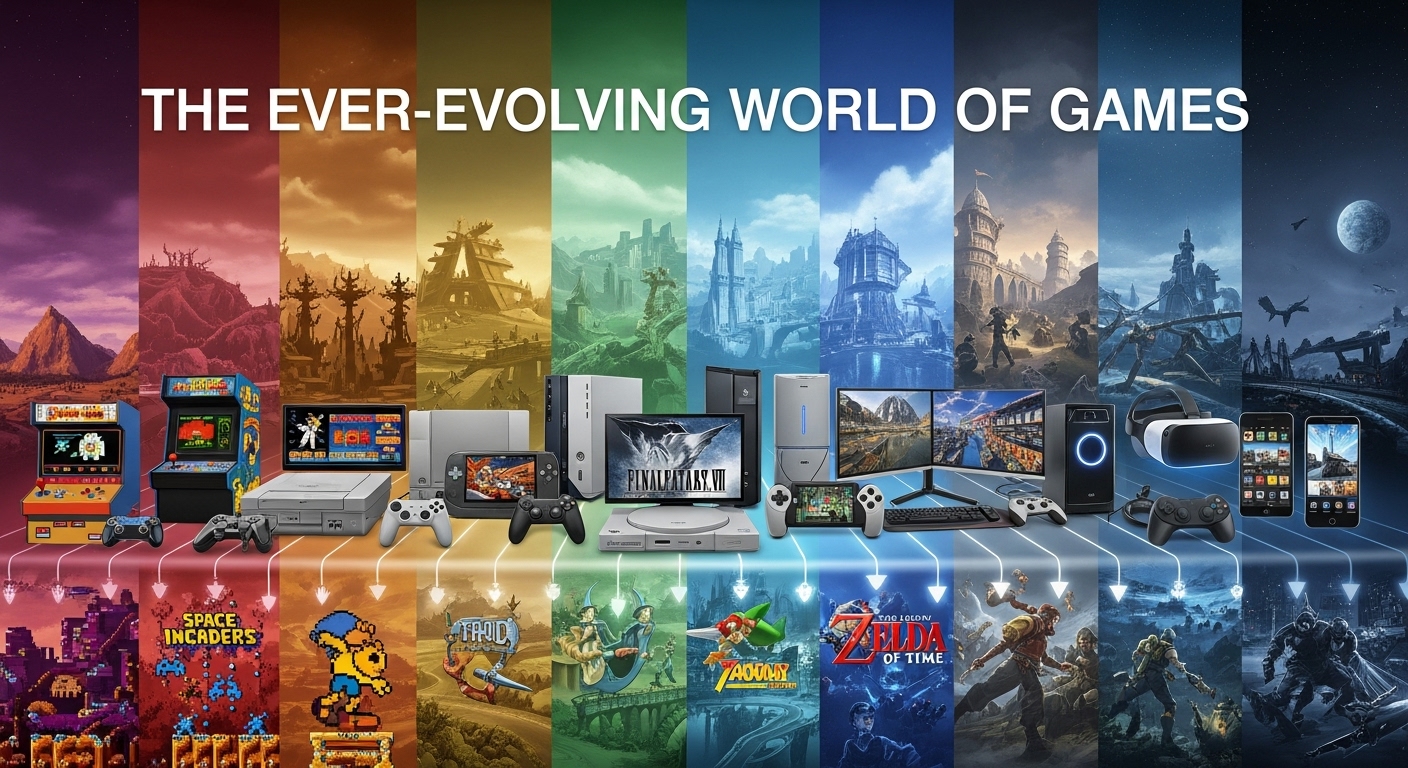
In the ever-evolving world of video games, developers are constantly seeking new ways to captivate and engage players. While many games stick to familiar formulas and established genres, there exists a growing category of games that break the mold, offering experiences that feel fresh, exciting, and unconventional. These games defy traditional gaming conventions, embracing unique gameplay mechanics, innovative storytelling, or imaginative art styles. The result is a collection of titles that are not only entertaining but also push the boundaries of what video games can be. In this blog post, we’ll explore some of the most innovative and unique games that have made an impact on the gaming world and discuss what makes them stand out in a crowded industry.
Defining “Unique” in the Gaming Landscape
The term “unique” can mean many different things when applied to video games. It can refer to a novel gameplay mechanic, an unconventional art style, a thought-provoking narrative, or even a game that completely redefines what a game is. In essence, a unique game is one that offers something different from the norm, something that stands out in a sea of sequels, remakes, and generic titles. What makes these games so special is that they offer players experiences they may not have encountered before, and in doing so, they challenge expectations and broaden the possibilities of what games can achieve.
Journey: A Minimalist Masterpiece
One of the most widely praised examples of a unique game is Journey, developed by Thatgamecompany and released in 2012. At first glance, Journey may seem like a simple exploration game set in a vast desert, but it is much more than that. The game is a meditation on solitude, beauty, and connection. Players control a robed figure as they journey across a stunning desert landscape, with the goal of reaching a distant mountain peak. The twist is that the game features no dialogue or traditional storytelling, relying solely on visuals and music to convey its narrative.
What sets Journey apart from other games is its ability to evoke deep emotional responses from players without the need for complex mechanics or lengthy cutscenes. The minimalist gameplay and the stunning art direction combine to create a powerful emotional experience. The game also includes an innovative multiplayer element: players can encounter one another in the desert, but they cannot communicate through text or voice chat. Instead, they can only communicate through simple gestures. This unique multiplayer design fosters a sense of shared experience and cooperation, even though players are often strangers. Journey is a perfect example of how a game can be unique not only in its mechanics but in its emotional impact as well.
The Stanley Parable: A Game About Choices and Narratives
Another standout example of a unique game is The Stanley Parable. Developed by Davey Wreden and William Pugh, The Stanley Parable is a narrative-driven experience that plays with the very concept of player choice. The game begins with the player controlling Stanley, an office worker who suddenly finds himself alone in an empty office building. The game is guided by a narrator who tells the player where to go and what to do, but the player is free to ignore the narrator’s instructions and explore different paths.
What makes The Stanley Parable so unique is its exploration of choice and free will in gaming. Unlike traditional games, where players are often expected to follow a set path or goal, The Stanley Parable encourages players to deviate from the narrative and see how the story changes in response. The game has multiple endings, each of which reflects the player’s decisions, making every playthrough feel different. The game subverts traditional game mechanics and storytelling techniques, inviting players to question the nature of choice in video games and whether the player truly has control over their actions.
Undertale: Breaking the RPG Mold
Toby Fox’s Undertale is another game that defies expectations and redefines what an RPG can be. Released in 2015, Undertale tells the story of a young human who falls into an underground world filled with monsters. What makes Undertale unique is its approach to combat. Instead of simply defeating enemies in battle, the game offers players the option to spare them. Players can choose to engage in non-violent dialogue with the monsters, offering them the chance to resolve conflicts peacefully.
This non-violent approach to combat is a central mechanic of the game and has a profound impact on the storyline. The player’s actions, whether choosing to spare or fight monsters, directly affect the outcome of the game, leading to multiple endings based on their decisions. Undertale also subverts RPG tropes with its quirky humor, emotional depth, and memorable characters. The game’s ability to allow players to approach conflict in a way that is both unconventional and meaningful makes it a standout title in the RPG genre.
Papers, Please: A Game About Morality and Bureaucracy
Papers, Please, developed by Lucas Pope, is a game that explores the moral dilemmas of bureaucracy and the consequences of one’s actions within a totalitarian state. Set in the fictional Eastern Bloc country of Arstotzka, players take on the role of an immigration officer tasked with inspecting documents and deciding whether to allow or deny people entry into the country. The job sounds simple enough, but the stakes are high, and the game quickly becomes a moral and ethical challenge.
What makes Papers, Please unique is its exploration of moral ambiguity. Players are constantly faced with difficult decisions, such as whether to let in refugees fleeing violence or whether to follow strict government orders that might harm innocent people. The game’s narrative develops based on the player’s choices, and every decision feels consequential. It forces players to question their own sense of right and wrong, as they are pushed to balance their personal ethics with the demands of an oppressive government. Papers, Please is a brilliant example of how a video game can use its mechanics to create a compelling and thought-provoking narrative.
Outer Wilds: A Space Exploration Game with a Twist
Outer Wilds, developed by Mobius Digital, is a space exploration game that blends science fiction with time-loop mechanics. Players take on the role of an astronaut exploring a mysterious solar system, but there’s a catch: the sun goes supernova every 22 minutes, resetting time and forcing the player to start over. The goal of the game is to uncover the secrets of the solar system and solve the mystery of why time keeps resetting.
What makes Outer Wilds unique is its non-linear approach to exploration and its reliance on player curiosity rather than combat. Instead of following a set path or completing traditional quests, players are free to explore the planets, learn about their environments, and uncover hidden secrets. The time loop mechanic adds a layer of complexity, as players must use each 22-minute cycle to gather information and make progress toward solving the mystery. Outer Wilds is a game that rewards exploration and experimentation, encouraging players to think outside the box and learn from their mistakes. Its combination of time loops, exploration, and mystery makes it a standout title in the genre.
The Witness: A Puzzle Game That Challenges Perception
The Witness, developed by Jonathan Blow, is a first-person puzzle game set on a mysterious island filled with intricate puzzles. The game’s unique feature is its approach to teaching the player how to solve puzzles. Unlike most puzzle games, The Witness does not rely on tutorials or explanations. Instead, it expects players to learn by observing their surroundings and experimenting with the environment.
The puzzles in The Witness are deeply intertwined with the world itself. As players explore the island, they encounter puzzles that are connected to the island’s various environments and landmarks. The game encourages players to pay attention to patterns, symbols, and environmental clues in order to solve increasingly complex puzzles. The game’s minimalist design and lack of hand-holding create a sense of discovery and intellectual challenge that is rare in puzzle games. The Witness is a game that rewards observation, patience, and creative thinking, offering a unique experience for players who enjoy a challenge.
What Remains of Edith Finch: A Narrative Masterpiece
What Remains of Edith Finch, developed by Giant Sparrow, is a narrative-driven adventure game that tells the story of the Finch family, who are cursed by a series of tragic deaths. Players take on the role of Edith Finch, the last surviving member of the family, as she explores the family home and uncovers the stories of her relatives.
The game’s uniqueness lies in its storytelling and how it presents each family member’s story. Each narrative is told through a different gameplay mechanic, from first-person perspectives to abstract, surreal sequences. This variety in gameplay keeps the experience fresh and immersive, as players experience the stories from different points of view. What Remains of Edith Finch is a deeply emotional and thought-provoking game that explores themes of family, loss, and the passage of time. Its innovative narrative structure and poignant storytelling make it a standout title in the adventure genre.
Conclusion: The Future of Unique Games
The games discussed in this blog post are just a small sample of the innovative and unique experiences that have shaped the gaming landscape. These games are more than just entertainment; they are thought-provoking, emotionally resonant, and often push the boundaries of what video games can achieve. As technology continues to evolve and developers continue to experiment with new ideas, we can expect even more unique games to emerge in the future.
The beauty of unique games is that they remind us of the limitless potential of the gaming medium. Whether through innovative mechanics, creative storytelling, or immersive worlds, these games offer players experiences that are unlike anything they’ve encountered before. In a world where sequels and franchises often dominate the gaming industry, these titles prove that there’s always room for innovation and originality. The future of gaming is bright, and it will undoubtedly continue to be shaped by the creativity and daring of developers who are willing to take risks and create something