Introduction
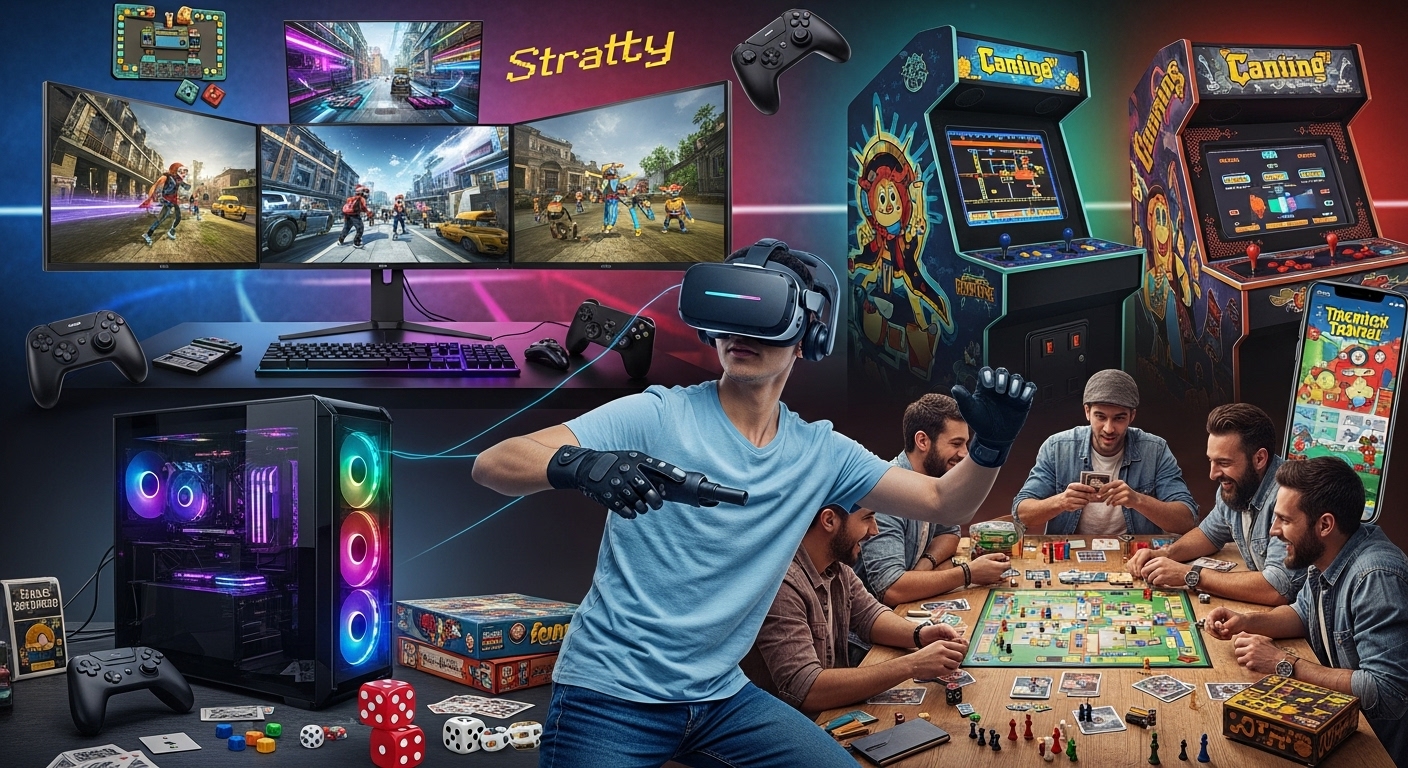
Games have been an essential part of human civilization long before digital technology came into existence. From ancient board games carved into stone to the immersive digital adventures of today, games have always been a reflection of creativity, strategy, and the human desire for play. They entertain, challenge, and connect us in ways few other forms of art can. In the modern world, the term “games” encompasses a vast spectrum—ranging from physical sports and tabletop experiences to complex virtual universes powered by cutting-edge technology. This blog delves into the fascinating world of games, exploring their history, evolution, psychological impact, technological transformation, and their future as a form of universal entertainment and connection.
The Ancient Origins of Play
Games are as old as human civilization itself. Archaeological discoveries have revealed that people were playing structured games over 4,000 years ago. Ancient Egypt had Senet, believed to symbolize the journey of the soul through the afterlife. In Mesopotamia, the Royal Game of Ur offered both entertainment and strategic engagement. Similarly, China’s Go and India’s Chess introduced intellectual depth to gameplay, making them not just forms of fun but also tools of learning and skill development.
These early games were more than just pastimes—they were reflections of culture, spirituality, and intellect. Through them, societies learned the value of strategy, patience, and foresight. They built social bonds, taught ethics, and often symbolized larger philosophical ideas about life and destiny.
The Transition from Physical to Digital Games
For centuries, games remained physical—played on boards, fields, and courts. However, the 20th century brought a revolution. With the invention of computers and electronics, games began to move into the digital realm. The first video game, often credited as “Pong,” appeared in the 1970s, marking the dawn of a new era. Simple in concept yet revolutionary in execution, it proved that fun could exist in pixels just as much as it did on paper or in playfields.
Soon after, arcade machines began to populate malls and entertainment centers, becoming the social hubs of the time. Games like Space Invaders, Pac-Man, and Donkey Kong defined an entire generation, laying the groundwork for the billion-dollar gaming industry we see today. The digital transformation allowed developers to experiment with genres, storytelling, and interactivity, opening doors to creativity never seen before.
The Golden Age of Consoles
The 1980s and 1990s are often referred to as the golden age of video gaming. Iconic consoles like the Nintendo Entertainment System, Sega Genesis, and later the PlayStation changed the way people interacted with games. These devices brought gaming into homes and made it a shared family activity. Characters such as Mario, Sonic, and Link became cultural icons, recognized around the globe.
What made this era special was the spirit of innovation. Developers began crafting entire worlds filled with stories, challenges, and imagination. Games were no longer simple competitions of score—they became adventures, journeys, and emotional experiences. This era also introduced competitive gaming and multiplayer modes, creating a sense of community among players.
The Rise of Online Gaming and Global Connectivity
The arrival of the internet transformed gaming forever. No longer confined to local friends or split screens, players could now connect with opponents and allies from around the world. Online games introduced massive multiplayer environments where thousands of people could coexist in shared digital worlds.
Games like World of Warcraft, Counter-Strike, and later Fortnite and PUBG turned gaming into a social activity that transcended geography. The concept of esports emerged, turning skilled gamers into professional athletes with audiences in the millions. Competitive tournaments filled arenas and were broadcast globally, marking the rise of gaming as a spectator sport.
Online gaming also brought communities closer together. Forums, chat servers, and streaming platforms became digital meeting grounds where players discussed strategies, shared experiences, and celebrated their love for games.
The Psychological and Social Benefits of Gaming
Contrary to the outdated belief that games lead to isolation, research now shows that gaming offers significant cognitive, emotional, and social benefits. Strategically designed games improve problem-solving skills, memory, and multitasking abilities. Players often learn teamwork, leadership, and communication when playing cooperatively.
Gaming also acts as an emotional outlet. It provides a sense of achievement, progress, and control—feelings that can boost mental well-being. Story-driven games allow players to explore empathy and decision-making, as they experience narratives from different perspectives.
Socially, games have become platforms for friendship and connection. Many lifelong relationships are formed through online communities and co-op gameplay. In an era where digital interaction is the norm, gaming offers a genuine sense of belonging and shared purpose.
The Artistic Evolution of Games
Games are not just technological marvels—they are works of art. From visually stunning environments to emotionally rich storylines, modern games rival films and literature in their artistic expression. Developers employ writers, musicians, voice actors, and visual artists to craft experiences that evoke emotion, curiosity, and awe.
Games like Journey, The Last of Us, and Ghost of Tsushima showcase how art, music, and storytelling can merge seamlessly within gameplay. They invite players to explore deep moral questions, cultural histories, and human connections. Unlike passive media, games offer interactivity—allowing players to become co-creators of their stories through choice and action.
Mobile Gaming and the Expansion of Accessibility
The smartphone revolution turned gaming into one of the most accessible forms of entertainment on the planet. Mobile games have introduced gaming to people who never considered themselves gamers before. With easy-to-play mechanics and the convenience of being available anywhere, mobile games like Candy Crush, Clash Royale, and Genshin Impact have reached billions of users.
This accessibility has made gaming more inclusive, breaking down barriers of age, geography, and experience. Mobile gaming also paved the way for new business models such as free-to-play and in-game purchases, changing how the industry generates revenue.
Technological Innovations Shaping Modern Gaming
Technology continues to redefine what games can achieve. High-definition graphics, advanced motion capture, and realistic physics engines have created lifelike experiences. Virtual Reality (VR) and Augmented Reality (AR) immerse players in environments where the line between real and virtual fades.
Artificial Intelligence (AI) plays a key role in shaping smarter, adaptive gameplay. AI-driven opponents react intelligently, and procedural generation allows developers to create endless worlds dynamically. Cloud gaming, meanwhile, eliminates hardware limitations, enabling users to play high-quality games on any device with an internet connection.
Sound design, too, has advanced dramatically. 3D audio and immersive soundscapes make players feel truly present in their virtual worlds. The combination of these technologies results in experiences that engage all senses and evoke genuine emotion.
Cultural Influence and Representation in Games
As games became more mainstream, they also became mirrors of society. Developers now explore themes of identity, culture, and representation. Games increasingly feature diverse characters, inclusive stories, and socially relevant themes. They allow players from different backgrounds to see themselves reflected in digital heroes and heroines.
Cultural authenticity has become a key design goal. Games inspired by mythology, history, and folklore preserve cultural narratives while making them interactive and engaging. For example, games rooted in ancient civilizations or indigenous stories offer education alongside entertainment, blending tradition with technology.
The Future of Games: Beyond the Screen
The future of gaming is boundless. With advancements in artificial intelligence, virtual environments, and haptic feedback, the next generation of games will go far beyond visual and auditory experiences. Players may soon be able to feel textures, temperatures, and even emotions through sensory technology.
The concept of the metaverse—persistent digital worlds where players can live, work, and play—will blur the line between gaming and reality. Cloud computing will make high-end gaming accessible to all, while blockchain technology could introduce new forms of digital ownership and economy within games.
Educational and therapeutic gaming will also grow in prominence. Games designed for training, health improvement, and emotional therapy will help shape real-world skills and well-being. The possibilities are endless as the medium continues to evolve.
Conclusion
Games have always been more than just entertainment. They are a form of expression, a means of connection, and a catalyst for innovation. From the ancient strategy games of our ancestors to the immersive digital universes of today, the essence of gaming has remained the same—the joy of play, challenge, and creativity.
In today’s fast-paced digital world, games stand at the intersection of art, technology, and human emotion. They shape how we learn, communicate, and imagine the future. As technology continues to advance, gaming will not just evolve—it will redefine how we experience life itself.
The infinite playgrounds of gaming remind us that every game, whether physical or digital, is a reflection of the human spirit’s boundless capacity for fun, discovery, and imagination. The future of games is not just about playing—it’s about living, learning, and creating in worlds without limits.