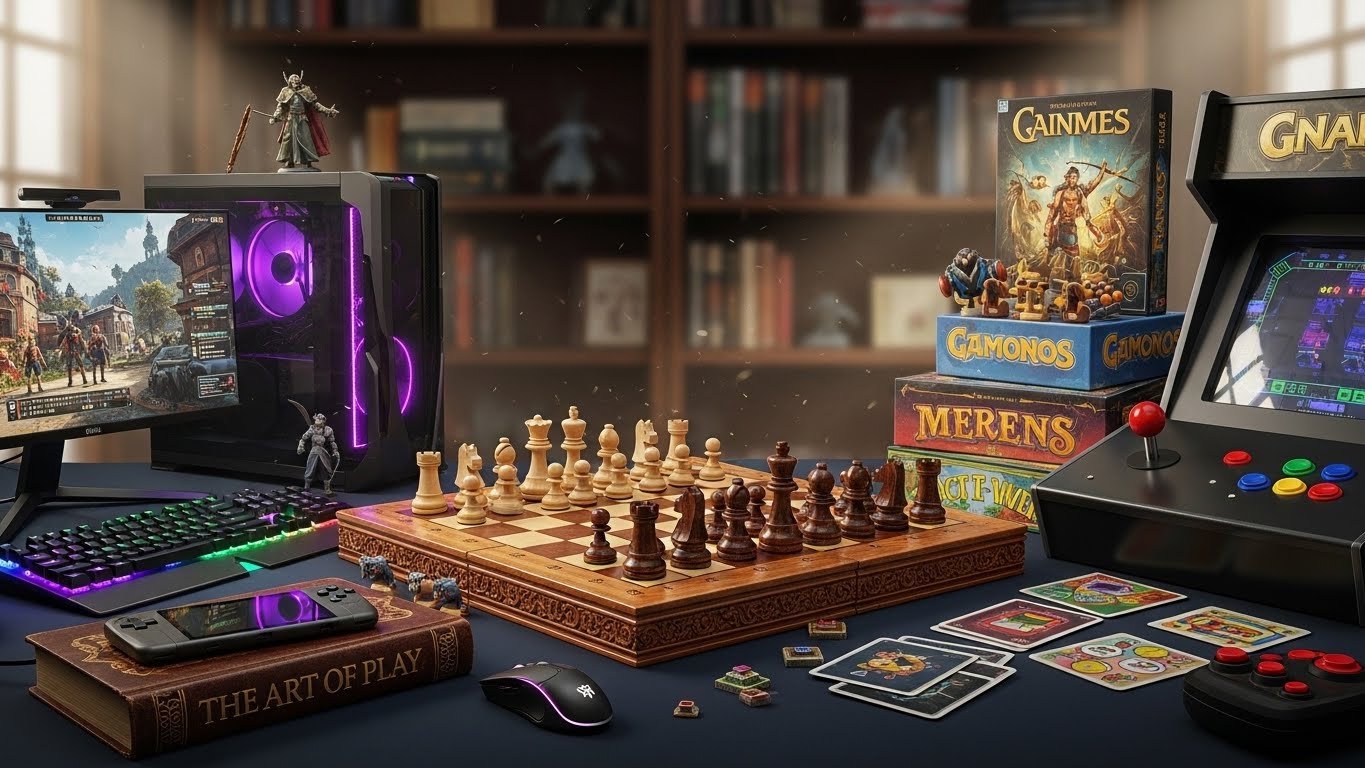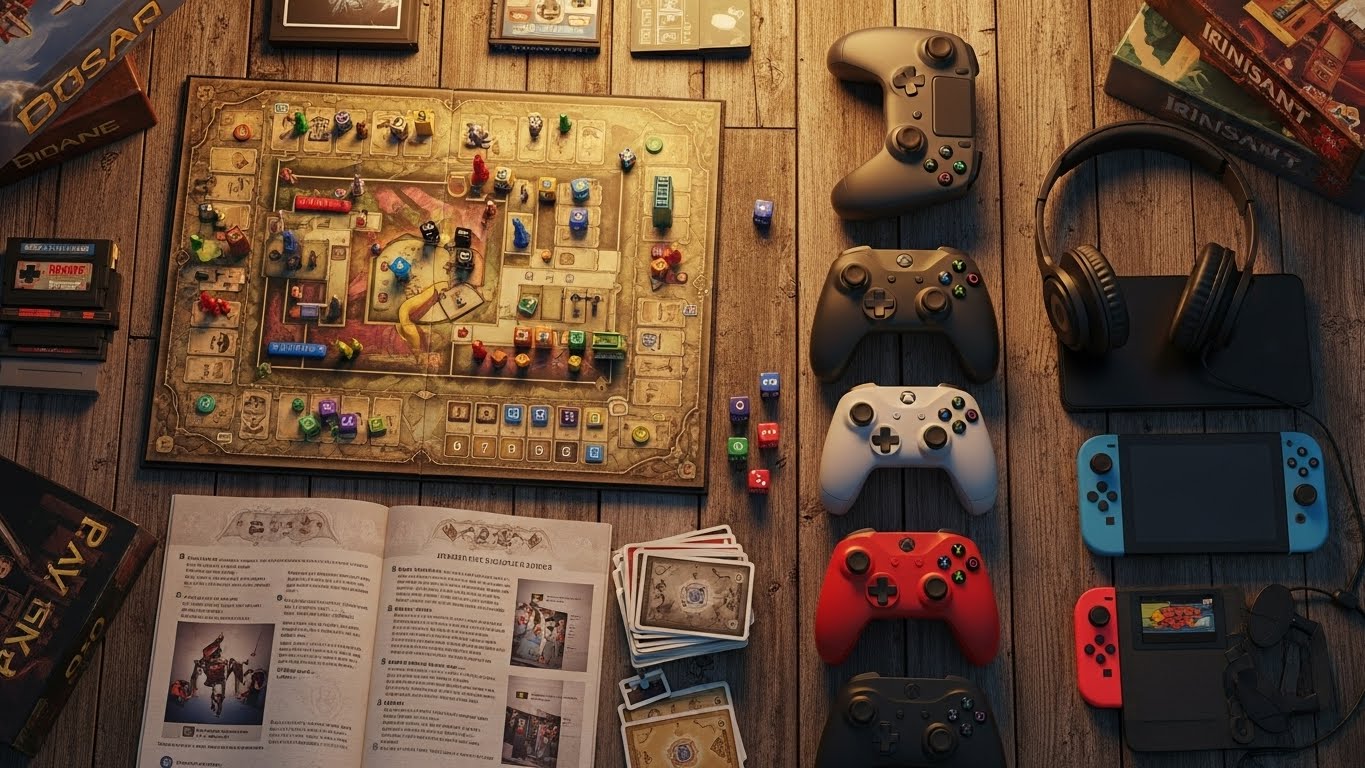
Video gaming has become an integral part of modern entertainment and culture, with millions of players across the globe. What started as a niche hobby for a small group of enthusiasts has transformed into a multi-billion-dollar industry with global impact. Over the past few decades, gaming has seen incredible advancements, from simple pixelated screens to fully immersive worlds that feel almost real. This transformation has not only been technological but cultural, influencing how we interact, learn, and socialize.
In this blog post, we will explore the evolution of video games, from their early beginnings to the modern-day, focusing on key moments, technological advancements, and the impact on the industry. Additionally, we will take a glimpse into the future of gaming and consider where it might be headed.
The Birth of Video Games: From Military Experiments to Arcade Hits
The origins of video gaming can be traced back to the 1950s and early 1960s when computer scientists started experimenting with interactive entertainment. One of the earliest known video games was Spacewar! (1962), developed by Steve Russell and his colleagues at MIT. It wasn’t a commercial product but a game created by enthusiasts for enthusiasts. Spacewar! is considered the first real video game, and it was played on massive mainframe computers, far from the hands of the public.
However, it wasn’t until the early 1970s that video gaming began to enter the public domain. The first commercially successful video game was Pong, created by Nolan Bushnell and released by Atari in 1972. Pong was a simple simulation of table tennis, but its impact was immense. It was the first arcade game to gain widespread popularity and introduced video gaming to a broader audience. The success of Pong launched the arcade gaming era, leading to the creation of many more iconic games like Space Invaders (1978) and Pac-Man (1980).
The 1970s and early 1980s marked the golden age of arcades. These machines, often located in malls and amusement parks, became a cultural phenomenon. For many young people, going to the arcade was a social event—a place to challenge friends, compete for high scores, and experience the thrill of interactive entertainment. The emergence of these early games set the stage for what would become one of the most popular and influential entertainment industries in the world.
The Console Revolution: Bringing Games into the Living Room
As arcades flourished, there was growing demand for video games that could be played at home. The early home consoles, such as the Atari 2600, brought video gaming into the living room. Released in 1977, the Atari 2600 used interchangeable cartridges, allowing players to switch between different games instead of being locked into a single game, as was the case with earlier home consoles. This flexibility was revolutionary at the time, and it helped establish video gaming as a mainstream form of entertainment.
However, by the early 1980s, the video game industry was facing a major crisis. The market became flooded with low-quality games, leading to consumer fatigue and the infamous video game crash of 1983. The collapse of the industry nearly wiped out the home console market, but it also created an opportunity for innovation. In 1985, Nintendo released the Nintendo Entertainment System (NES), a console that would not only revive the gaming industry but also transform it forever.
The NES introduced a host of memorable games, such as Super Mario Bros., The Legend of Zelda, and Metroid, which set new standards for gameplay, graphics, and narrative. Nintendo also implemented a strict licensing system to ensure that only high-quality games made it onto their platform, restoring consumer confidence in the market. This period saw the rise of iconic video game franchises that continue to thrive today.
Around the same time, Sega entered the home console market with the Sega Master System, followed by the Sega Genesis in 1989. While the Sega Genesis never quite reached the same level of dominance as the NES, it introduced the world to Sonic the Hedgehog, which became Sega’s mascot and one of the most recognizable video game characters of all time.
The 3D Revolution: Advancements in Graphics and Gameplay
The 1990s marked a pivotal moment in the evolution of video games. The transition from 2D to 3D graphics was a monumental shift that would fundamentally change the way video games were designed and experienced. With the rise of 3D graphics, players were able to explore fully realized, dynamic worlds, interact with characters from different perspectives, and experience a new level of immersion.
In 1994, Sony released the PlayStation, a console that introduced 3D gaming to a mass audience. The PlayStation was powered by cutting-edge hardware that allowed for impressive 3D environments and sophisticated game design. Titles like Final Fantasy VII, Metal Gear Solid, and Gran Turismo pushed the limits of what was possible in gaming, introducing cinematic storytelling, realistic graphics, and deep gameplay.
A year after the PlayStation’s release, Nintendo launched the Nintendo 64, which introduced a unique controller and further revolutionized 3D gaming. The Nintendo 64’s most iconic titles included Super Mario 64, The Legend of Zelda: Ocarina of Time, and GoldenEye 007. Super Mario 64, in particular, is considered one of the greatest games ever made, as it redefined platforming games and demonstrated the potential of 3D worlds for exploration.
The 1990s also saw the rise of the first-person shooter (FPS) genre, with games like Doom (1993) and Quake (1996) defining the genre. These games allowed players to experience the action through the eyes of the protagonist, creating a level of immersion previously unavailable in gaming. The rise of online multiplayer gaming, particularly with games like Quake and Unreal Tournament, laid the foundation for the competitive gaming scene that would later evolve into esports.
Online Gaming: The World of Virtual Connection
By the early 2000s, the rise of the internet began to change how people played video games. No longer were players limited to local multiplayer modes or single-player experiences. The advent of broadband internet allowed players to connect to online servers and play with or against others around the world.
The release of the Xbox in 2001 introduced online gaming to console players through Xbox Live, a subscription service that enabled players to compete in online multiplayer matches. Halo 2 (2004) became one of the most iconic titles of this era, setting the stage for the rise of online shooters and competitive gaming. The success of online gaming on consoles, alongside the growing popularity of MMOs like World of Warcraft (2004), which attracted millions of players into a persistent online world, revolutionized the gaming industry.
The growing importance of online gaming also gave rise to a new generation of competitive gamers. Esports, once a niche interest, began to emerge as a major cultural and financial force, with tournaments for games like League of Legends, Counter-Strike, and Dota 2 drawing huge audiences both online and in person.
Online gaming also fostered the development of gaming communities. Players no longer just interacted with their friends locally; they formed friendships and rivalries with people from across the globe. Online multiplayer games became social hubs where people could connect, form teams, and share experiences, marking a shift in gaming culture towards collaboration and community.
The Mobile Revolution: Gaming Anytime, Anywhere
In the late 2000s and early 2010s, the release of smartphones such as the iPhone brought about another revolution in the gaming industry. Mobile games quickly became accessible to anyone with a smartphone, offering players the ability to game on-the-go, at work, or during their daily commute. Mobile gaming took a different direction than console or PC gaming, as it focused more on simplicity, accessibility, and short gameplay sessions.
Titles like Angry Birds, Clash of Clans, and Candy Crush Saga became global phenomena, attracting millions of players who had never considered themselves gamers before. The rise of free-to-play models, with in-app purchases and microtransactions, further fueled the growth of mobile gaming. These games proved to be highly addictive, and their business models were incredibly lucrative.
Mobile gaming also paved the way for new genres, including puzzle games, casual games, and augmented reality (AR) games. Pokémon GO (2016), an AR-based game, became one of the most successful mobile games of all time, combining gaming with real-world exploration. Players used their smartphones to “catch” Pokémon in real-world locations, and the game encouraged physical activity while offering a new form of social interaction.
The success of mobile games has shown that gaming is no longer confined to a specific type of device. Today, players can game on consoles, PCs, smartphones, and even smartwatches. Mobile gaming has democratized gaming in many ways, making it accessible to anyone with a smartphone.
The Future of Gaming: Virtual Reality, AI, and Cloud Gaming
The future of video gaming is poised to be even more exciting than its past. New technologies such as virtual reality (VR), artificial intelligence (AI), and cloud gaming are already starting to reshape the gaming experience.
Virtual reality has already begun to make waves in gaming, with platforms like the Oculus Rift and PlayStation VR offering immersive experiences. VR allows players to step into fully realized 3D worlds, interact with objects and characters, and experience gaming in a completely new way. The technology still has some limitations, but it holds immense potential for the future, especially as hardware continues to improve.
Artificial intelligence is another area of rapid development in gaming. AI has already been used to create more dynamic, responsive non-playable characters (NPCs), but it could be used in the future to create entire games that adapt to a player’s actions and choices. Imagine a game world that responds to your behavior, creating a unique and personalized experience every time you play.
Cloud gaming is another technology that could change the way we play games. Services like Google Stadia and Xbox Cloud Gaming (formerly known as Project xCloud) aim to make it possible to play high-quality games on almost any device, as long as there is an internet connection. With cloud gaming, there’s no need for expensive hardware—just a reliable internet connection and a device to stream the games.
The rise of these technologies suggests that the gaming experience will continue to become more immersive, interactive, and accessible in the years to come. As the industry advances, players can look forward to even more exciting and innovative gaming experiences that blur the lines between the virtual and real worlds.
Conclusion: The Endless Possibilities of Video Gaming
The evolution of video games has been nothing short of extraordinary. From their humble beginnings as military experiments to their current status as one of the most influential entertainment industries in the world, video games have come a long way. Technological advancements, such as 3D graphics, online multiplayer, mobile gaming, and virtual reality, have allowed video games to transcend traditional entertainment and become a truly global, interactive experience.
The future of gaming holds even more promise. As new technologies continue to develop, gaming will likely continue to evolve and offer new experiences that were once unimaginable. One thing is clear: gaming is no longer just a pastime—it’s a cultural force, an art form, and a way to connect with others. The journey from pixels to realism is far from over, and the next chapter in gaming’s evolution promises to be as exciting as anything that has come before.