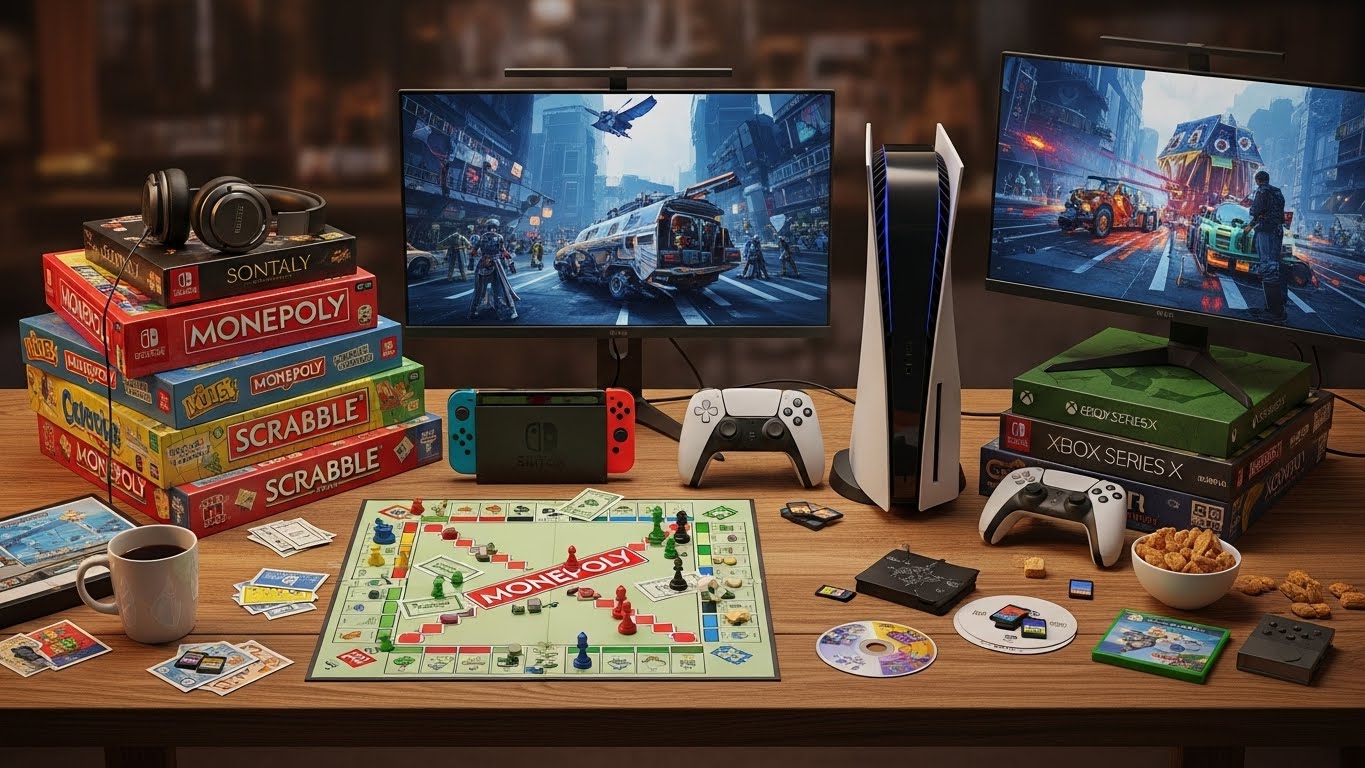
Gaming has come a long way from the simple arcade machines and board games that entertained people in the past. Over the years, video games, digital entertainment, and interactive play have grown into an expansive industry that continues to push the boundaries of technology, creativity, and storytelling. Whether it’s playing a casual mobile game on your phone, diving into a complex strategy game on a console, or engaging in virtual reality adventures, the gaming world has evolved to offer something for everyone.
In this blog post, we will explore the evolution of gaming, its cultural impact, and the diverse genres that have emerged over the years. From the early days of gaming to the cutting-edge technologies of today, we will look at how games have become a powerful form of entertainment and why they hold such a special place in modern culture.
The Early Days of Gaming: From Tabletop to Arcade
The history of gaming dates back to the pre-video game era, when people enjoyed various tabletop games, card games, and sports. Games like chess, checkers, and Monopoly offered strategic and social play long before the advent of digital technology. As people began to seek more interactive and dynamic forms of entertainment, games began to evolve.
The first major leap in gaming came with the development of video games in the 1950s and 1960s. Early video games like Tennis for Two (1958) and Spacewar! (1962) were developed by scientists and engineers, but it was Pong, created by Atari founder Nolan Bushnell in 1972, that became the first commercially successful arcade game. Pong was a simple two-player tennis game, but its success marked the beginning of the video game revolution.
Arcade games soon became a cultural phenomenon in the late 1970s and early 1980s. Classics like Pac-Man, Space Invaders, and Donkey Kong captured the imaginations of millions and laid the foundation for the home console market that would follow.
The Rise of Home Consoles: The 1980s and 1990s
The 1980s and 1990s were a transformative period for gaming, with the introduction of home consoles that allowed players to enjoy their favorite games without needing to visit an arcade. The first successful home console, the Atari 2600, was released in 1977 and brought video gaming into households around the world. Though Atari initially dominated the market, it was the release of the Nintendo Entertainment System (NES) in 1985 that truly changed the gaming landscape.
The NES introduced iconic franchises like Super Mario, Zelda, and Metroid, which became the foundation for Nintendo’s long-lasting dominance in the gaming industry. The 1980s and 1990s also saw the birth of Sega’s Genesis and Super Nintendo Entertainment System (SNES), which competed with the NES and cemented the rivalry between Sega and Nintendo, two of the biggest players in the gaming industry during that time.
As consoles evolved, so did the complexity and sophistication of games. The 16-bit era introduced a more vibrant palette of colors, improved sound capabilities, and better graphics. Games like Sonic the Hedgehog and Super Mario World set new standards for platformers, while Final Fantasy and The Legend of Zelda: Ocarina of Time introduced more complex and immersive storytelling.
In the 1990s, the rise of 3D graphics revolutionized gaming. The release of Sony’s PlayStation in 1994, alongside titles like Gran Turismo, Crash Bandicoot, and Metal Gear Solid, showcased the power of 3D environments and complex narratives. Similarly, Nintendo’s 64-bit console brought the gaming world beloved titles like Super Mario 64 and The Legend of Zelda: Ocarina of Time, setting new benchmarks for both gameplay and technical innovation.
The Emergence of Online Gaming and Multiplayer Experiences
As gaming consoles and personal computers became more powerful in the late 1990s and early 2000s, online gaming began to emerge as a major force. LAN (Local Area Network) gaming and online services like AOL and Commodore 64 allowed players to connect over the internet for the first time, paving the way for massive multiplayer experiences.
The first true online gaming phenomenon came with the launch of World of Warcraft (WoW) in 2004. WoW revolutionized massively multiplayer online role-playing games (MMORPGs), allowing thousands of players to explore vast, shared virtual worlds together. This marked a shift in gaming culture from solo play to cooperative and competitive multiplayer experiences.
At the same time, console gaming was also making strides in the online realm. The release of Xbox Live in 2002 allowed players to connect their Xbox consoles to the internet, creating a unified online multiplayer experience. Games like Halo 2, Call of Duty, and Gears of War defined the next generation of console gaming, with a focus on online play, voice chat, and competitive multiplayer modes.
The Golden Age of Gaming: The 2000s and 2010s
The 2000s and 2010s are often referred to as the “golden age” of gaming, with an explosion of creativity and diversity in game development. This period saw the rise of blockbuster franchises like Grand Theft Auto, Call of Duty, Halo, and The Elder Scrolls. These franchises became global cultural touchstones, with massive fan bases and continued releases over multiple generations of consoles.
At the same time, independent game development began to take off. Games like Minecraft, Undertale, and Braid showed that small teams of developers could create massive hits without the backing of large corporations. The accessibility of digital distribution platforms like Steam and the growing popularity of crowdfunding sites like Kickstarter democratized game development, enabling a new wave of innovative, experimental, and creative titles.
The 2000s and 2010s also marked the rise of mobile gaming. The release of the Apple iPhone in 2007 led to a surge of mobile games like Angry Birds, Candy Crush Saga, and Pokémon Go. Mobile gaming introduced a more casual, on-the-go form of gaming, appealing to a broader audience that included people who may never have considered themselves traditional gamers.
Additionally, the development of virtual reality (VR) and augmented reality (AR) technologies has begun to push gaming into new frontiers. While VR gaming is still in its early stages, platforms like Oculus Rift, PlayStation VR, and HTC Vive have opened up new possibilities for immersive gaming experiences. Titles like Beat Saber, Half-Life: Alyx, and No Man’s Sky VR show that VR has the potential to create fully immersive worlds that engage all of the player’s senses.
The Wide Variety of Game Genres
One of the most remarkable aspects of gaming is its diversity. Over the years, the gaming industry has developed a broad spectrum of genres, each offering unique experiences. Here are a few of the most popular and influential gaming genres:
1. Action and Adventure Games
Action games are fast-paced and focus on physical challenges. Games like Super Mario, Uncharted, and God of War fall into this category. Adventure games, on the other hand, tend to emphasize exploration, puzzle-solving, and story-driven gameplay. Titles like The Legend of Zelda, Tomb Raider, and Red Dead Redemption combine action and adventure to create thrilling experiences.
2. Role-Playing Games (RPGs)
RPGs allow players to immerse themselves in deep, narrative-driven worlds where they can control the actions and decisions of a character. Popular RPG franchises include Final Fantasy, The Elder Scrolls, and The Witcher series. RPGs can vary greatly in terms of style, from turn-based combat to real-time action combat.
3. Strategy and Simulation Games
Strategy games require careful planning and tactical decision-making. Games like Starcraft, Civilization, and XCOM fall into this category. Simulation games, on the other hand, focus on creating realistic environments or systems that mimic real-life experiences. Popular examples include The Sims, SimCity, and Farming Simulator.
4. Sports and Racing Games
Sports games like FIFA, Madden NFL, and NBA 2K simulate real-world sports, while racing games like Gran Turismo and Mario Kart offer players a chance to race in a variety of environments. These games often focus on competition, skill development, and multiplayer interaction.
5. Puzzle and Casual Games
Casual and puzzle games are designed to be easy to pick up and play, making them ideal for quick gaming sessions. Games like Tetris, Candy Crush, and Bejeweled have become iconic in this genre, appealing to a wide range of players, from casual gamers to dedicated puzzle enthusiasts.
The Future of Gaming
The future of gaming is filled with excitement and possibility. As technology continues to advance, the way we experience games will evolve in new and unexpected ways. Cloud gaming, where players can stream games without the need for powerful hardware, is becoming more prevalent. Virtual reality, augmented reality, and artificial intelligence will continue to push the boundaries of immersion and gameplay.
Moreover, the continued rise of esports and live-streaming platforms like Twitch and YouTube suggests that gaming will only become more social, with professional gaming tournaments attracting millions of viewers worldwide.