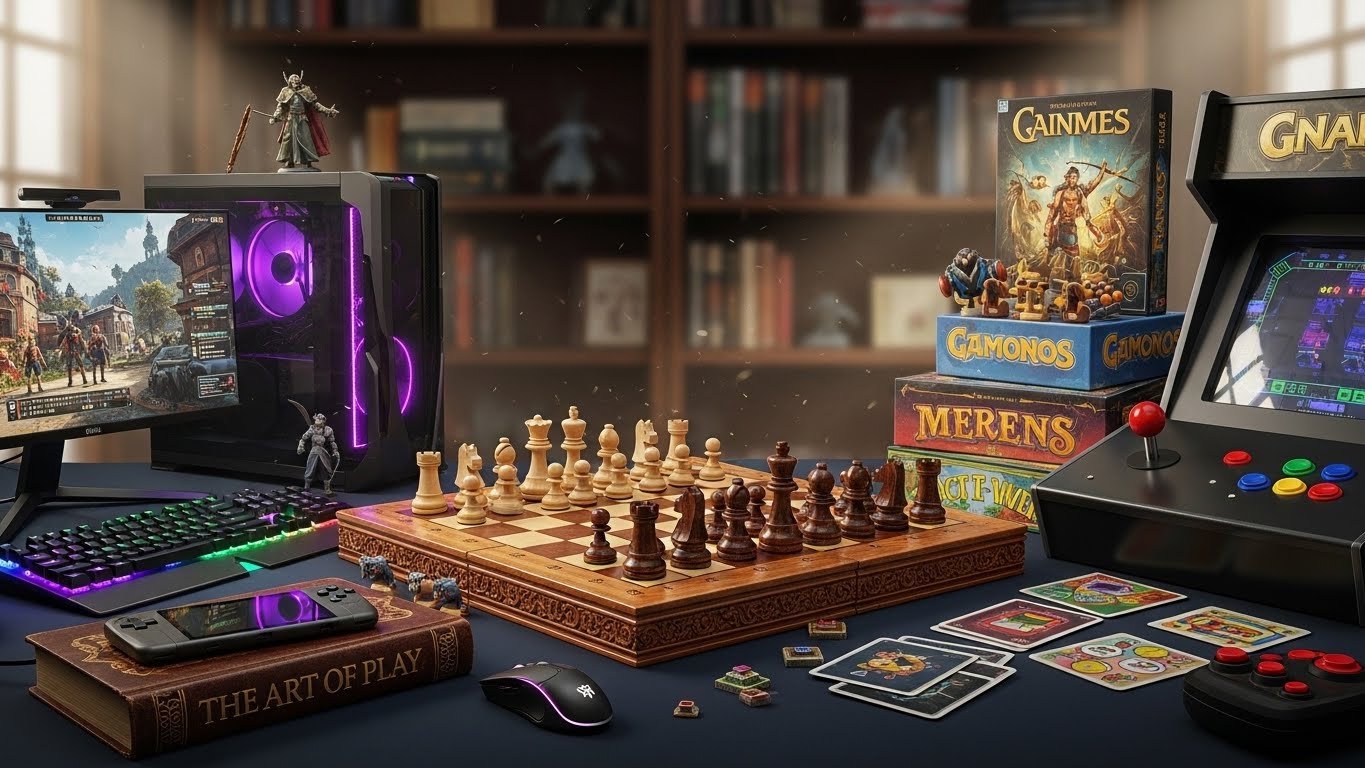
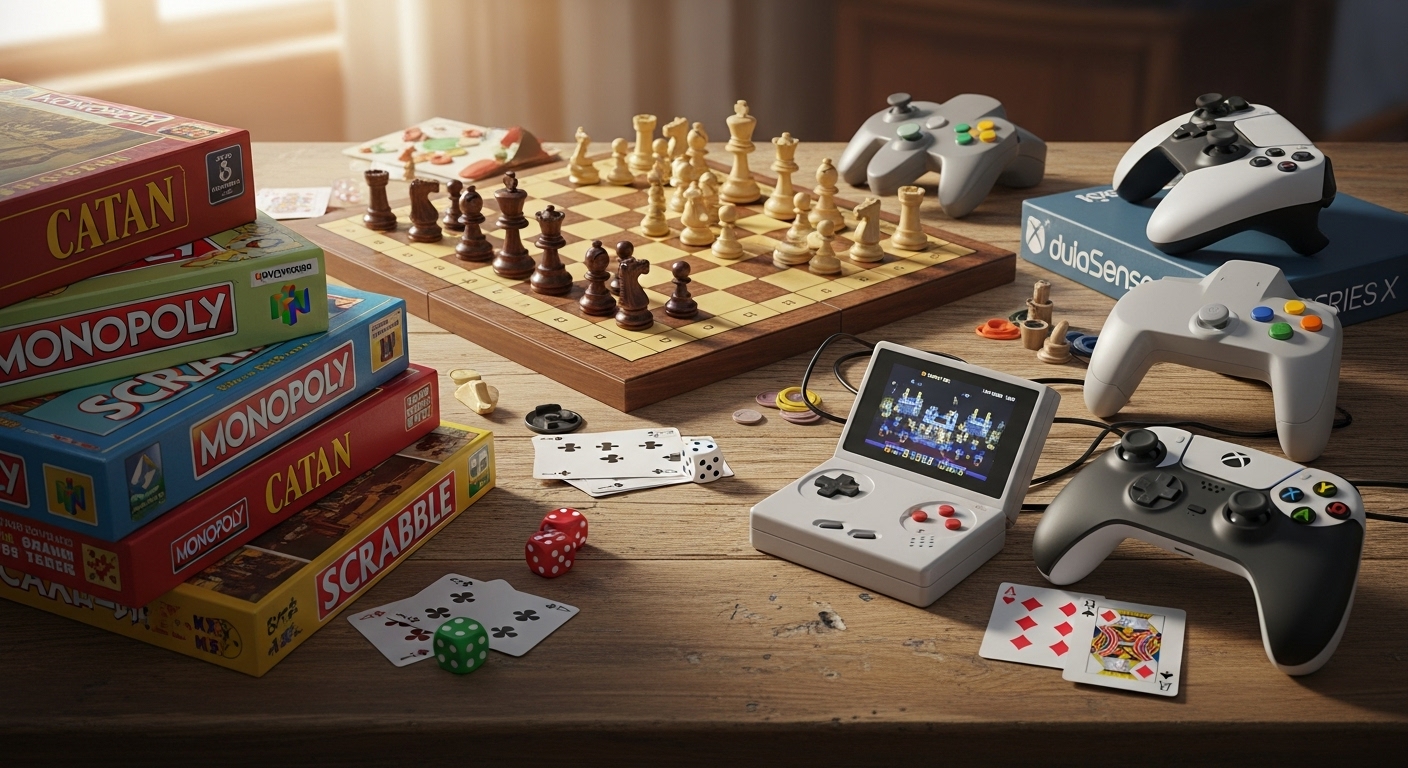
Games, in their many forms, have been a part of human culture for millennia. From simple board games played on a wooden table to complex video games that immerse players in vast digital worlds, the evolution of games has followed the development of human society, technology, and creativity. Today, gaming is no longer confined to children or hobbyists; it has grown into a global industry that touches all age groups and spans numerous genres. In this blog post, we will explore the world of games, their origins, technological innovations, social impact, and the future of this dynamic form of entertainment.
The Origins of Games: From Ancient Times to the Modern Day
Games have a long history, and their origins can be traced back to ancient civilizations. Archaeologists have uncovered evidence of board games and dice dating back thousands of years. One of the earliest known games is Senet, which was played in ancient Egypt around 3100 BCE. The game involved moving pieces across a board, and while the rules are not entirely understood, it’s clear that games were a form of entertainment and sometimes even associated with spiritual or ceremonial significance.
In ancient China, Go, a strategy board game, became immensely popular. Dating back over 2,500 years, Go is still played today, especially in East Asia. Other early games, such as chess and backgammon, have roots that span across various cultures, with chess believed to have originated in India in the 6th century AD.
By the time we reach the modern era, the notion of games had evolved from these simple forms into increasingly sophisticated recreations. The advent of technology and the digital age has taken games from physical objects to entirely virtual environments, creating an entertainment landscape that is both diverse and inclusive.
The Rise of Video Games: A New Era of Digital Play
The 20th century marked the beginning of a new era for games: the rise of video games. The first commercially successful video game, Pong, was released in 1972 by Atari. Pong was a simple two-dimensional tennis simulation, yet it laid the groundwork for the explosive growth of the video game industry. As technology advanced, so did the complexity of games. The 1980s saw the introduction of arcade classics like Space Invaders and Pac-Man, which captivated players with their challenging gameplay and catchy soundtracks.
The real breakthrough for video games came in the 1990s when home consoles such as the Super Nintendo Entertainment System (SNES) and Sega Genesis brought gaming into living rooms worldwide. These consoles introduced beloved franchises like Super Mario, Sonic the Hedgehog, and The Legend of Zelda, which set the foundation for the gaming culture we recognize today.
With the growth of personal computers and the internet, gaming began to transcend the limitations of physical hardware. Early online multiplayer games like Warcraft and Quake paved the way for modern multiplayer experiences, enabling players to connect across distances and compete or cooperate in real-time.
The Impact of Mobile Gaming: Bringing Games to the Masses
The next wave in the gaming revolution came with the rise of mobile gaming. The launch of the iPhone in 2007 and subsequent smartphones made gaming more accessible than ever before. Casual games like Angry Birds, Candy Crush, and Clash of Clans became worldwide phenomena, offering easy-to-play experiences for players of all ages. These games were often free-to-play, relying on in-app purchases or ads to generate revenue, which led to a new monetization model that reshaped the gaming industry.
Mobile gaming also broadened the scope of who could be considered a “gamer.” In the past, video games were often associated with young men who had access to dedicated gaming consoles or PCs. However, mobile gaming democratized gaming by allowing people of all demographics, including older adults and women, to engage with games on their phones during their daily routines.
The app stores also fostered a boom in indie games, where small developers could reach massive audiences. Games like Flappy Bird, Monument Valley, and Pokémon GO were created by independent developers but went on to become cultural touchstones.
The Expanding Universe of Genres in Gaming
One of the reasons for the enduring appeal of games is their vast variety. Unlike other forms of entertainment, gaming provides a near-endless number of genres and sub-genres, each offering different types of challenges, experiences, and player interactions. Some of the most popular genres in gaming include:
Action and Adventure Games
Games that fall into the action-adventure genre are often characterized by a combination of fast-paced gameplay, exploration, and puzzle-solving. These games usually feature strong narratives, memorable characters, and immersive worlds. Examples include The Legend of Zelda series, Uncharted, and Tomb Raider.
Role-Playing Games (RPGs)
RPGs are deeply narrative-driven games where players take on the role of a character and progress through quests, leveling up and gaining new abilities. The genre includes both single-player and multiplayer experiences, with standout titles like The Witcher 3, Final Fantasy, and World of Warcraft.
Strategy Games
In strategy games, players must think critically and plan their moves to achieve victory. These games often involve resource management, tactical battles, and long-term planning. Examples include Civilization, StarCraft, and XCOM.
Simulation and Sports Games
Simulation games mimic real-world activities, such as running a business, managing a farm, or simulating life itself, as seen in games like The Sims and SimCity. Sports games like FIFA, NBA 2K, and Madden NFL simulate real-world sports, offering competitive and team-based play for fans of these sports.
Fighting and Multiplayer Online Battle Arenas (MOBAs)
Fighting games like Street Fighter and Mortal Kombat offer fast-paced combat between players, often featuring intricate combos and special moves. MOBAs like League of Legends and Dota 2 are multiplayer games where players control unique characters with specialized skills and work together to defeat the opposing team.
First-Person Shooters (FPS)
FPS games like Call of Duty, Counter-Strike, and Overwatch immerse players in intense combat scenarios, where they control a character’s actions from a first-person perspective. These games often feature fast reflexes, strategic planning, and cooperative or competitive multiplayer modes.
The Social Side of Gaming: Community, Competition, and Streaming
Gaming has increasingly become a social activity, thanks to the development of online multiplayer modes and streaming platforms. Games like Fortnite, Apex Legends, and Minecraft have massive online communities where players team up with friends or strangers to complete objectives, battle other players, and share experiences.
Online multiplayer games have also paved the way for eSports, a competitive gaming scene where professional players and teams compete in tournaments for cash prizes and global recognition. Games like League of Legends, Dota 2, and Counter-Strike have become staples of the eSports world, drawing millions of viewers and participants from around the globe.
Streaming platforms like Twitch and YouTube Gaming have further elevated gaming into a spectator sport, with gamers sharing their gameplay live with audiences. Influencers and professional streamers have built massive followings, creating entire subcultures of gaming content creators and fans.
The Future of Gaming: What Lies Ahead?
The gaming industry continues to evolve, driven by technological advancements, changes in player behavior, and new forms of interactive experiences. Here are some of the most exciting trends shaping the future of gaming:
Virtual Reality and Augmented Reality
Virtual reality (VR) and augmented reality (AR) hold immense promise for the future of gaming. VR technology, with its immersive environments, can transform the way we experience games, making them more interactive and physically engaging. Games like Beat Saber and Half-Life: Alyx are already taking advantage of VR, and it’s expected that this technology will become more mainstream in the coming years. AR, as demonstrated by the success of Pokémon GO, has the potential to overlay virtual elements onto the real world, making the gaming experience more dynamic and interactive.
Cloud Gaming
Cloud gaming allows players to stream games from remote servers, rather than requiring powerful hardware to run the game locally. Services like Google Stadia, Xbox Cloud Gaming, and NVIDIA GeForce Now are leading the charge in making games accessible on virtually any device. Cloud gaming could change the way people interact with games, as high-performance gaming experiences will become available without the need for expensive consoles or PCs.
AI and Procedural Generation
Artificial intelligence (AI) is already used in games to create more dynamic and intelligent behavior for non-playable characters (NPCs). In the future, AI could be used to create even more complex narratives and responsive environments. Procedural generation, a method of creating content algorithmically, could allow developers to generate vast, unique worlds that are different every time a player logs in, making each experience in a game entirely fresh.
Blockchain and NFTs in Gaming
Blockchain technology, which underpins cryptocurrencies like Bitcoin, is starting to make its way into the gaming world. Non-fungible tokens (NFTs) are being used to create digital ownership of in-game assets, allowing players to truly own their in-game items, skins, or characters. While this concept is still controversial, it’s an area that could reshape how in-game economies and digital ownership work.