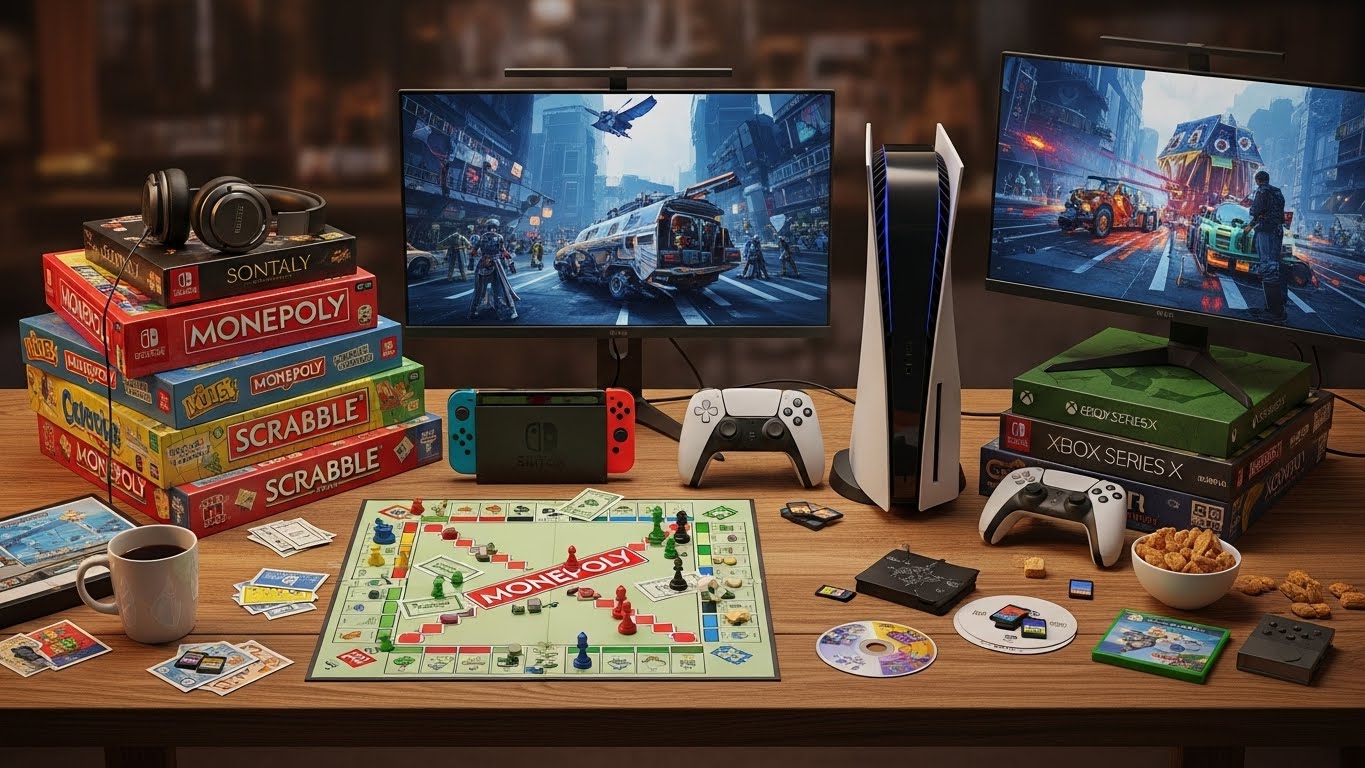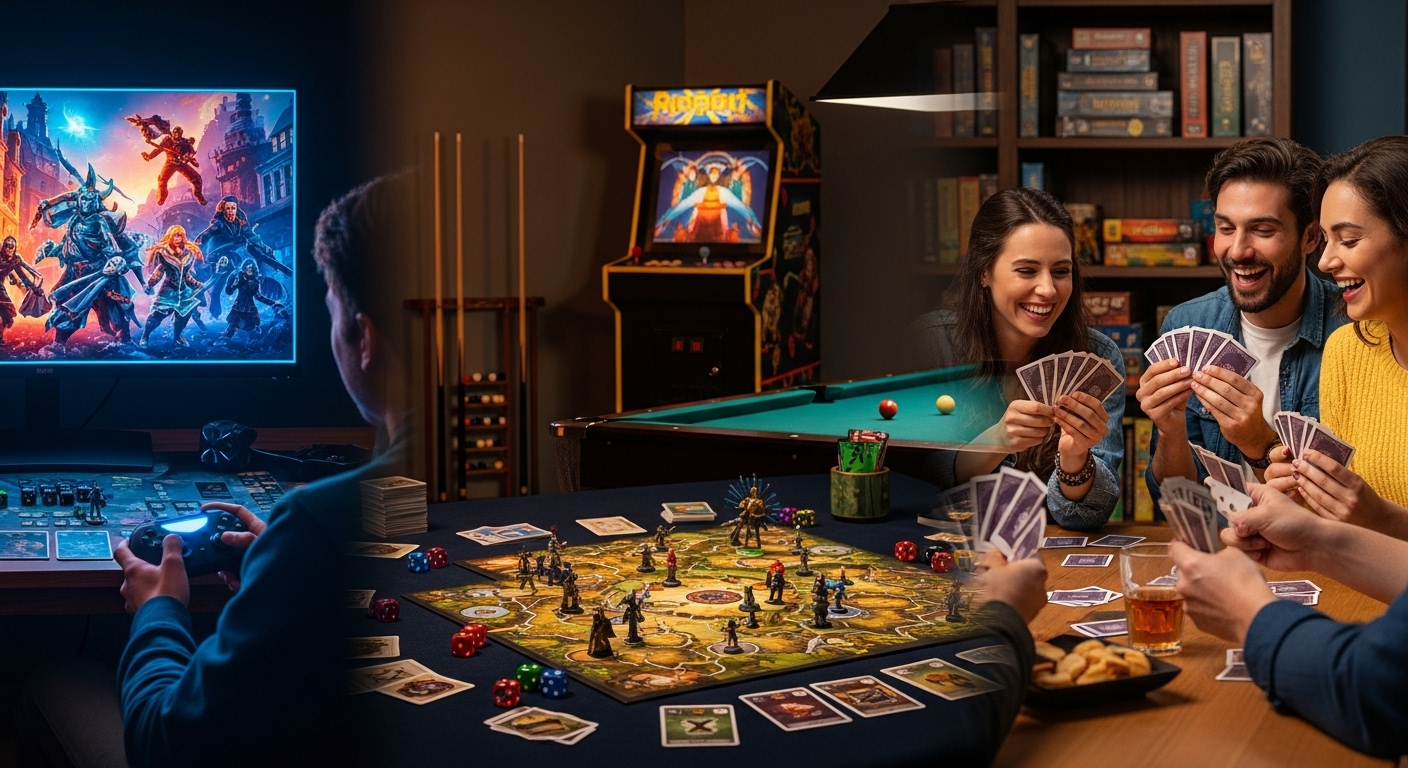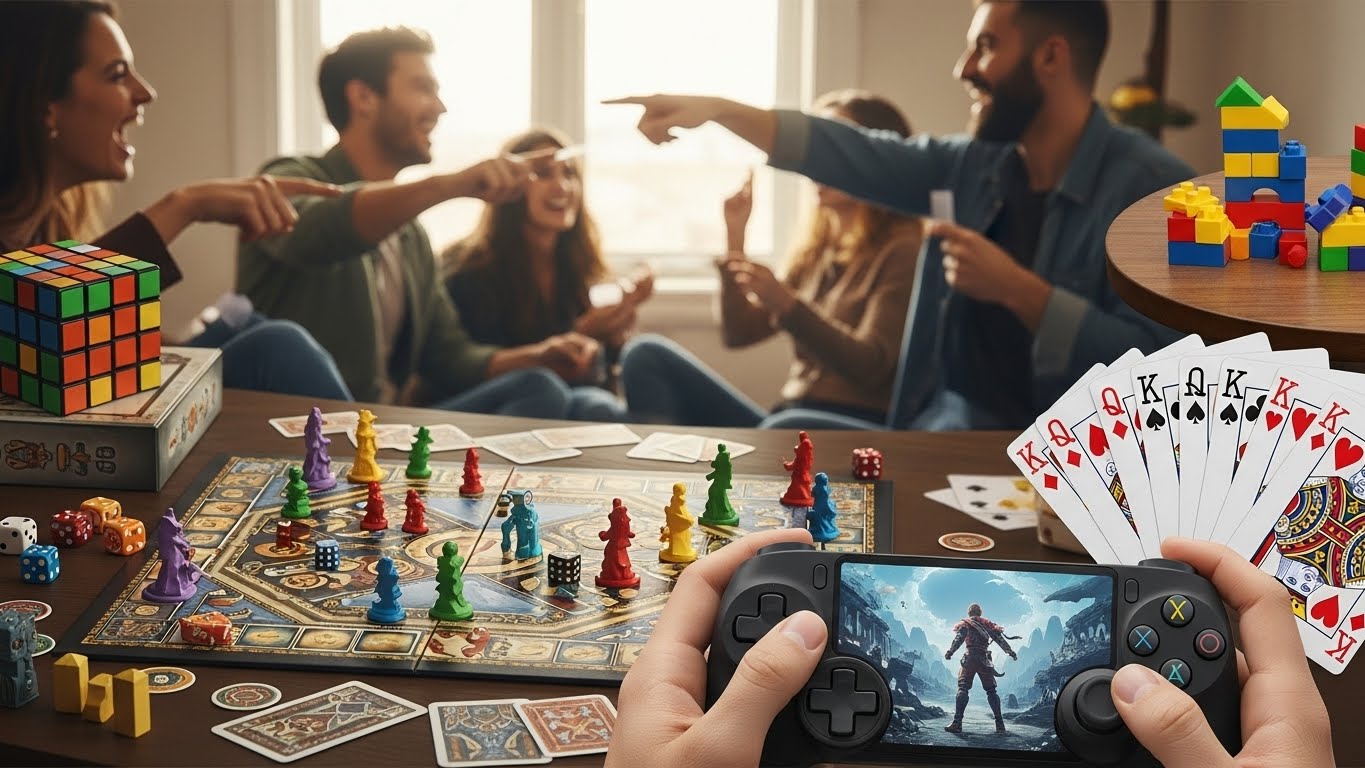
Games have always been an integral part of human culture, providing entertainment, fostering social connections, and even helping to develop critical skills. Over the years, games have evolved significantly, adapting to changes in technology, society, and culture. From traditional board games to the sophisticated virtual worlds of today, the gaming landscape has undergone a dramatic transformation.
In this blog post, we will take a deep dive into the fascinating world of games, exploring their history, different types of games, their impact on culture, and the future of gaming. Whether you’re a casual gamer or a dedicated enthusiast, understanding the evolution of games will give you a greater appreciation for how they’ve shaped and continue to shape our world.
The Origins of Games: Ancient Beginnings
The concept of games is as old as civilization itself. Early forms of games were primarily social activities meant to bring people together for enjoyment and competition. Many of the earliest games, such as chess, dice games, and board games, had strategic elements that challenged players’ intellect and offered opportunities for social interaction.
One of the oldest known games, Senet, was played in ancient Egypt as early as 3100 BCE. This board game involved players navigating pieces across a grid, using dice to determine movement. Senet was believed to have spiritual significance, symbolizing the journey to the afterlife.
Similarly, ancient Mesopotamians played a game known as The Royal Game of Ur, which dates back to around 2600 BCE. This game, which also used dice and featured a board with squares, was thought to be a mix of chance and strategy.
Board games like these not only entertained but also had deeper meanings related to religion, life, and death, reflecting the cultural beliefs of their time.
The Golden Age of Board Games
Throughout history, board games remained a staple of family entertainment. In the 19th and early 20th centuries, the popularity of games like Monopoly, Checkers, and Scrabble soared. These games provided a way for families and friends to spend time together, often around a dinner table, fostering face-to-face social interactions that are now becoming less common with the rise of digital entertainment.
Monopoly, created by Charles Darrow in 1933, is perhaps the most iconic board game of all time. The game simulated real estate trading, allowing players to buy, sell, and bankrupt each other in the pursuit of dominance. Over the years, the game has been adapted to various themes, from sports teams to movie franchises, illustrating its enduring appeal.
While the 20th century saw board games flourish, this era also marked the beginning of a new form of gaming: video games.
The Rise of Video Games: A New Era of Entertainment
In the 1950s and 1960s, computers were primarily used for scientific research, but a small group of pioneers began to experiment with creating games on these machines. One of the earliest examples of a video game was Tennis for Two, created by physicist William Higinbotham in 1958. This rudimentary game, displayed on an oscilloscope, allowed two players to control paddles and “hit” a ball back and forth—similar to the later popular game, Pong.
The 1970s marked the beginning of the video game boom. In 1972, Pong was released by Atari and became the first commercially successful arcade game. Pong’s simple yet addictive gameplay—where players controlled paddles to bounce a ball back and forth—captured the public’s imagination and set the stage for the explosion of arcade games in the following decades.
By the 1980s, the video game industry had expanded exponentially. Arcade games like Pac-Man, Space Invaders, and Donkey Kong became household names. These games represented the golden age of arcade gaming, where players would flock to arcades to compete for high scores and challenge their friends.
Home consoles like the Atari 2600 and Nintendo Entertainment System (NES) began to take video games into people’s homes, making them more accessible and mainstream. This era also introduced iconic characters like Mario, who would go on to become the face of Nintendo and one of the most recognizable video game characters in history.
The 3D Revolution and the Emergence of Modern Gaming
The 1990s ushered in a new wave of innovation in the gaming world with the advent of 3D graphics. Early 3D games, such as Super Mario 64, Doom, and The Legend of Zelda: Ocarina of Time, revolutionized gaming by introducing players to fully immersive 3D environments. These games pushed the boundaries of what was possible in terms of graphics, gameplay, and storytelling.
The rise of PlayStation, Nintendo 64, and Sega Dreamcast consoles in the 1990s made it possible for developers to create more complex and visually stunning games. 3D graphics allowed for greater exploration, more intricate designs, and the creation of vast, open worlds. The ability to explore these worlds in full 3D space offered an entirely new gaming experience, one that continues to be a defining feature of modern games.
This period also saw the birth of genres that are now synonymous with gaming, including first-person shooters (FPS), role-playing games (RPGs), and real-time strategy games (RTS). Titles like Quake, Final Fantasy VII, and Starcraft shaped the gaming landscape and introduced players to new ways of playing and interacting with games.
Online Multiplayer and the Age of Connectivity
The late 1990s and early 2000s marked the rise of online multiplayer games, transforming the way players interacted with each other. The advent of the internet allowed for players to compete against or cooperate with others in real-time, regardless of their geographic location. Games like Warcraft II, Diablo II, and EverQuest opened the doors to vast virtual worlds where players could team up, battle, and explore together.
One of the most significant milestones in online gaming was the release of World of Warcraft (WoW) in 2004. WoW quickly became the most popular MMORPG (Massively Multiplayer Online Role-Playing Game) in the world, attracting millions of subscribers. Its success proved that online gaming could not only be fun but could also create long-lasting communities of players who spent years building characters, completing quests, and forging friendships.
The rise of online multiplayer first-person shooters (FPS), such as Halo, Call of Duty, and Counter-Strike, also helped to solidify the importance of online gaming. These games brought competitive gaming to new heights, leading to the rise of esports and the establishment of professional gaming leagues, tournaments, and sponsorships.
Mobile Gaming and Casual Games
With the rise of smartphones in the late 2000s, gaming became more portable and accessible. Games like Angry Birds, Candy Crush, and Pokémon GO brought gaming to a wider audience, including casual gamers who might not have previously considered themselves gamers.
Mobile games were designed to be easy to play, often requiring little time investment or complex controls. This made them highly popular among people who wanted quick entertainment during their daily routines. The advent of app stores like Apple’s App Store and Google Play made it possible for developers to distribute games to a global audience, leading to an explosion of mobile gaming apps.
Augmented reality (AR) games, like Pokémon GO, brought physical locations into the gaming experience, encouraging players to explore their real-world environments while interacting with virtual elements. The success of mobile gaming has demonstrated that gaming can be more than just a pastime; it can be a way to engage with the world in a completely new way.
The Future of Gaming: Virtual Reality and Beyond
As technology continues to advance, the future of gaming promises to be even more immersive and interactive. Virtual reality (VR) and augmented reality (AR) are on the cutting edge of gaming technology, allowing players to enter fully realized digital worlds and interact with their environments in ways that were previously unimaginable.
VR headsets like the Oculus Rift, PlayStation VR, and HTC Vive have brought the potential of VR gaming to the mainstream. Games like Beat Saber and Half-Life: Alyx showcase the immersive possibilities of VR, where players can physically move and interact within virtual spaces, creating an entirely new dimension of gaming.
The integration of artificial intelligence (AI) is also transforming how games are designed. AI can create dynamic, ever-changing environments and intelligent non-playable characters (NPCs) that react to players’ actions in more sophisticated ways. This is already evident in games like Red Dead Redemption 2, where NPCs have complex routines, personalities, and interactions with the player.
Cloud gaming is another emerging trend that allows players to stream games directly to their devices, eliminating the need for powerful hardware. Services like Google Stadia, NVIDIA GeForce Now, and Xbox Cloud Gaming are paving the way for more seamless gaming experiences, where players can enjoy high-quality games on virtually any device with an internet connection.
Conclusion
The world of gaming has come a long way, from ancient board games to the immersive virtual realities of today. Gaming has evolved into a multi-faceted form of entertainment that appeals to people of all ages and backgrounds. It has shaped culture, influenced technology, and provided millions of hours of enjoyment.
As gaming continues to evolve, the possibilities are endless. Virtual reality, augmented reality, artificial intelligence, and cloud gaming are just a few of the innovations that will continue to shape the future of gaming. Whether it’s exploring new worlds, competing in esports tournaments, or simply relaxing with a mobile game, gaming will remain a central part of our digital lives for years to come.