Gaming has evolved from a niche hobby into a global cultural phenomenon, captivating millions of players worldwide across a vast range of platforms and genres. Whether you’re a casual mobile gamer, a dedicated PC enthusiast, or an avid console player, the world of gaming offers something for everyone. As technology continues to advance, the gaming industry has transformed in ways that were once unimaginable, offering increasingly immersive experiences that go far beyond traditional forms of entertainment. In this blog post, we’ll explore the diverse world of games, examining current trends, the impact of emerging technologies, and the future of interactive entertainment.
The Evolution of Gaming: From Arcade to Digital Immersion
The history of gaming can be traced back to the 1950s and 1960s when the first rudimentary computer-based games were created. However, it was the rise of arcade machines in the 1970s and 1980s that truly laid the foundation for modern gaming. Iconic games like Pong, Space Invaders, and Pac-Man became household names, and arcades became social hubs where people gathered to play and compete.
The early 1990s marked a pivotal moment in gaming history with the introduction of home consoles like the Super Nintendo and Sega Genesis, followed by the PlayStation and Xbox in the late 1990s. These systems made gaming more accessible and allowed players to enjoy a wide variety of games from the comfort of their homes. As technology advanced, so too did the complexity of games, with the introduction of 3D graphics, open-world exploration, and online multiplayer modes.
Fast forward to today, and gaming is more advanced than ever before. The arrival of powerful gaming PCs, next-gen consoles like the PlayStation 5 and Xbox Series X, and the rise of mobile gaming have further expanded the scope of gaming. At the same time, online platforms like Steam, Epic Games Store, and various mobile app stores have revolutionized how players discover and purchase games.
The Rise of Mobile Gaming: Play Anywhere, Anytime
One of the most significant trends in recent years has been the explosive growth of mobile gaming. The ubiquity of smartphones and tablets has made gaming more accessible than ever, allowing players to enjoy their favorite games on the go. From puzzle games like Candy Crush to battle royale titles like PUBG Mobile and Fortnite, mobile gaming has captured a massive audience, especially among casual gamers.
What sets mobile gaming apart from traditional gaming platforms is its accessibility and simplicity. Many mobile games are free-to-play, with in-app purchases that allow players to enhance their experience without requiring a large upfront investment. This model has made gaming more inclusive, allowing people of all ages and backgrounds to participate.
Moreover, mobile games have become increasingly sophisticated, with developers pushing the limits of what smartphones can handle in terms of graphics and gameplay. Titles like Genshin Impact, Call of Duty: Mobile, and Asphalt 9: Legends showcase the potential of mobile gaming, offering high-quality visuals and complex gameplay mechanics that were once only possible on console or PC.
The portability of mobile games also allows players to enjoy gaming in a variety of environments. Whether you’re waiting for a bus, relaxing at home, or traveling, your favorite game is just a few taps away. This level of convenience has contributed to the meteoric rise of mobile gaming, which continues to grow in both popularity and revenue.
The Evolution of Multiplayer Gaming: From Couch Co-op to Global Battles
While single-player games have always been a cornerstone of the gaming industry, multiplayer gaming has become increasingly central to the modern gaming experience. The rise of online gaming has enabled players to connect with friends and strangers alike, forming virtual communities and competing on a global scale.
Early examples of multiplayer gaming were limited to local co-op experiences, where friends gathered in the same room to play games like Mario Kart and GoldenEye 007. However, with the advent of the internet, online multiplayer games became the norm, allowing players to battle it out with others from around the world. Games like World of Warcraft, Counter-Strike, and League of Legends helped popularize the concept of competitive online gaming, leading to the formation of massive esports scenes that now attract millions of viewers.
The multiplayer gaming experience has also evolved with the rise of battle royale games like Fortnite, Apex Legends, and Call of Duty: Warzone. These games typically feature large-scale, last-man-standing matches that involve dozens or even hundreds of players competing against each other on vast, ever-changing maps. The combination of strategic gameplay, fast-paced action, and social interaction has made battle royale games a cultural phenomenon, with millions of players engaging in matches every day.
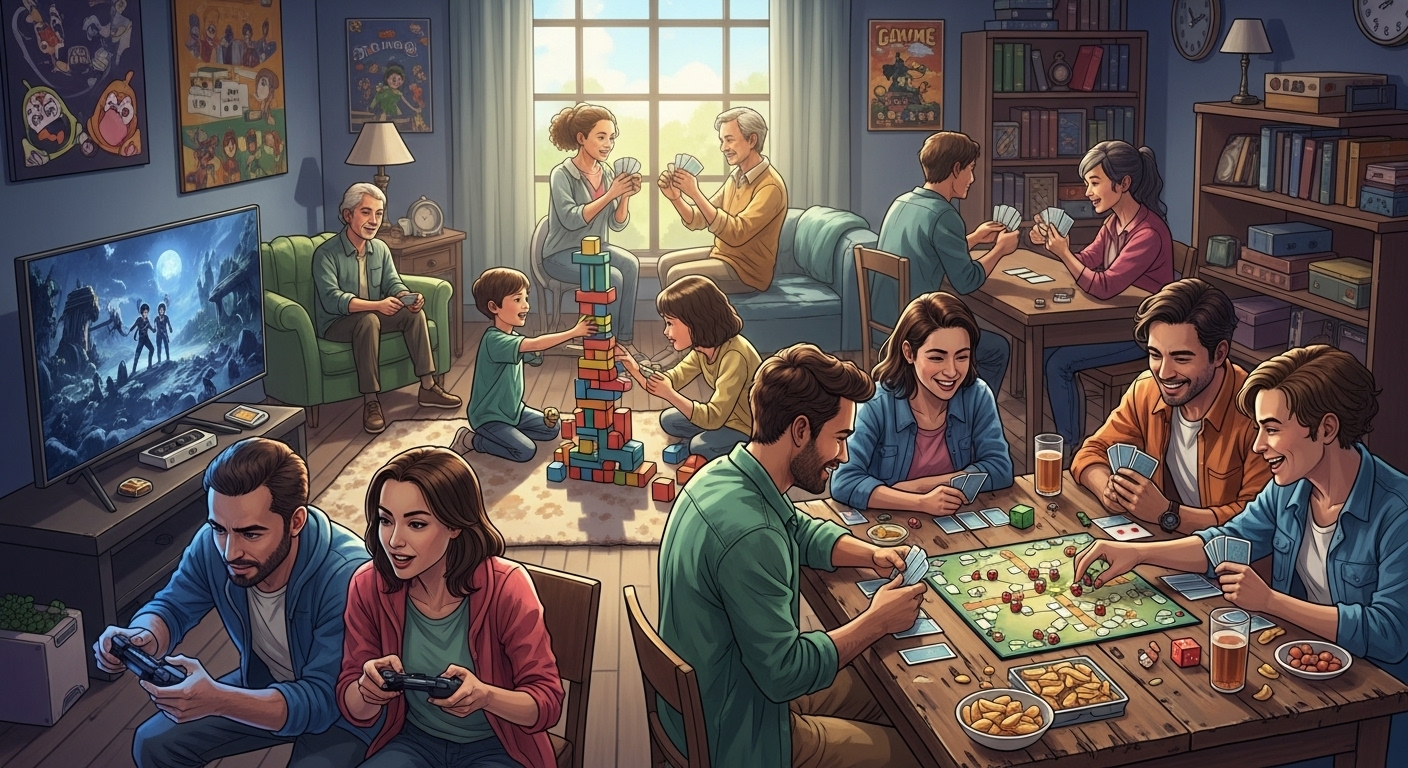
In addition to traditional competitive multiplayer modes, cooperative gaming has also seen a resurgence in recent years. Games like Overcooked!, Left 4 Dead, and Payday 2 allow players to team up and complete challenges together, fostering collaboration and teamwork. These types of games are especially popular among friends and families, offering a fun and engaging way to bond over shared experiences.
Virtual Reality and Augmented Reality: The Next Frontier of Gaming
As technology continues to advance, the gaming industry is exploring new ways to enhance player immersion through virtual reality (VR) and augmented reality (AR). Both technologies offer exciting possibilities for the future of gaming, allowing players to experience games in entirely new ways.
Virtual Reality takes immersion to the next level by creating entirely virtual environments that players can interact with in real-time. Using a VR headset, players are transported into digital worlds where they can look around, move, and even manipulate objects as if they were physically present. VR has already made a significant impact in gaming, with titles like Beat Saber, Half-Life: Alyx, and The Walking Dead: Saints & Sinners offering players rich, immersive experiences that were previously impossible.
While VR gaming is still in its early stages, it has the potential to completely redefine the way we experience games. As hardware becomes more advanced and affordable, the barrier to entry for VR gaming will continue to decrease, allowing more players to explore virtual worlds and participate in fully immersive experiences.
Augmented Reality, on the other hand, blends the digital and physical worlds, creating interactive experiences that overlay virtual elements onto the real world. One of the most popular examples of AR gaming is Pokémon Go, a game that uses a smartphone’s camera and GPS to allow players to catch virtual Pokémon in real-world locations. AR has the potential to revolutionize mobile gaming by creating interactive experiences that encourage players to explore their surroundings and engage with the world in new ways.
As both VR and AR technologies continue to develop, we can expect to see even more groundbreaking gaming experiences that blur the lines between reality and digital worlds.
The Impact of Streaming on Gaming: Play Without Limits
In addition to the rise of mobile and online gaming, another major trend in the gaming industry is the growth of game streaming services. Platforms like Google Stadia, Xbox Cloud Gaming, and NVIDIA GeForce NOW are changing the way players access and play games. Instead of relying on expensive hardware like gaming PCs or consoles, players can stream games directly to their devices, bypassing the need for high-end gaming equipment.
Game streaming works by running the game on a remote server, which then transmits the video and inputs back and forth between the player’s device and the server. This technology allows players to play graphically intensive games on devices like smartphones, laptops, and even smart TVs, without the need for powerful hardware.
The potential of game streaming is enormous, as it opens up gaming to a broader audience and reduces the barrier to entry for players who may not have access to high-performance gaming systems. It also offers the convenience of playing games on any device, anytime, anywhere, as long as there is an internet connection.
As internet speeds continue to improve and cloud infrastructure becomes more robust, game streaming is poised to become a major part of the gaming landscape, offering unprecedented convenience and flexibility for players.
The Future of Gaming: What’s Next?
Looking ahead, the future of gaming is an exciting and rapidly evolving space. As technology continues to advance, we can expect even more immersive and interactive experiences that push the boundaries of what gaming can offer.
Artificial intelligence will play a significant role in the future of gaming, enabling more dynamic and responsive game worlds. AI-driven characters and enemies could become more lifelike, reacting to player choices in more meaningful ways and creating unique experiences for every player.
Additionally, advanced graphics will continue to evolve, with photorealistic environments becoming more common in both single-player and multiplayer games. The combination of ray tracing technology and powerful hardware will create breathtaking visuals that make it harder to distinguish between the virtual and the real.
Another exciting development is the potential for cross-platform play, allowing players on different consoles, PCs, and mobile devices to play together in the same game. This feature is already available in several popular titles like Fortnite and Minecraft, and as the demand for cross-platform gaming grows, we can expect more developers to embrace this feature.
Lastly, indie games will continue to thrive as smaller developers push the boundaries of creativity, often delivering unique, experimental gameplay experiences that larger studios may not take risks on. The rise of digital storefronts and crowdfunding platforms has made it easier for indie developers to create and share their games with a global audience, and this trend will likely continue to flourish.
Conclusion
Gaming has come a long way since its early days, and as technology continues to advance, the world of interactive entertainment will only become more exciting and immersive. From mobile games and multiplayer experiences to VR, AR, and cloud gaming, the industry is evolving rapidly, offering players more ways to connect, compete, and explore than ever before. Whether you’re a casual gamer or a hardcore enthusiast, the future of gaming promises to be full of innovative experiences and opportunities