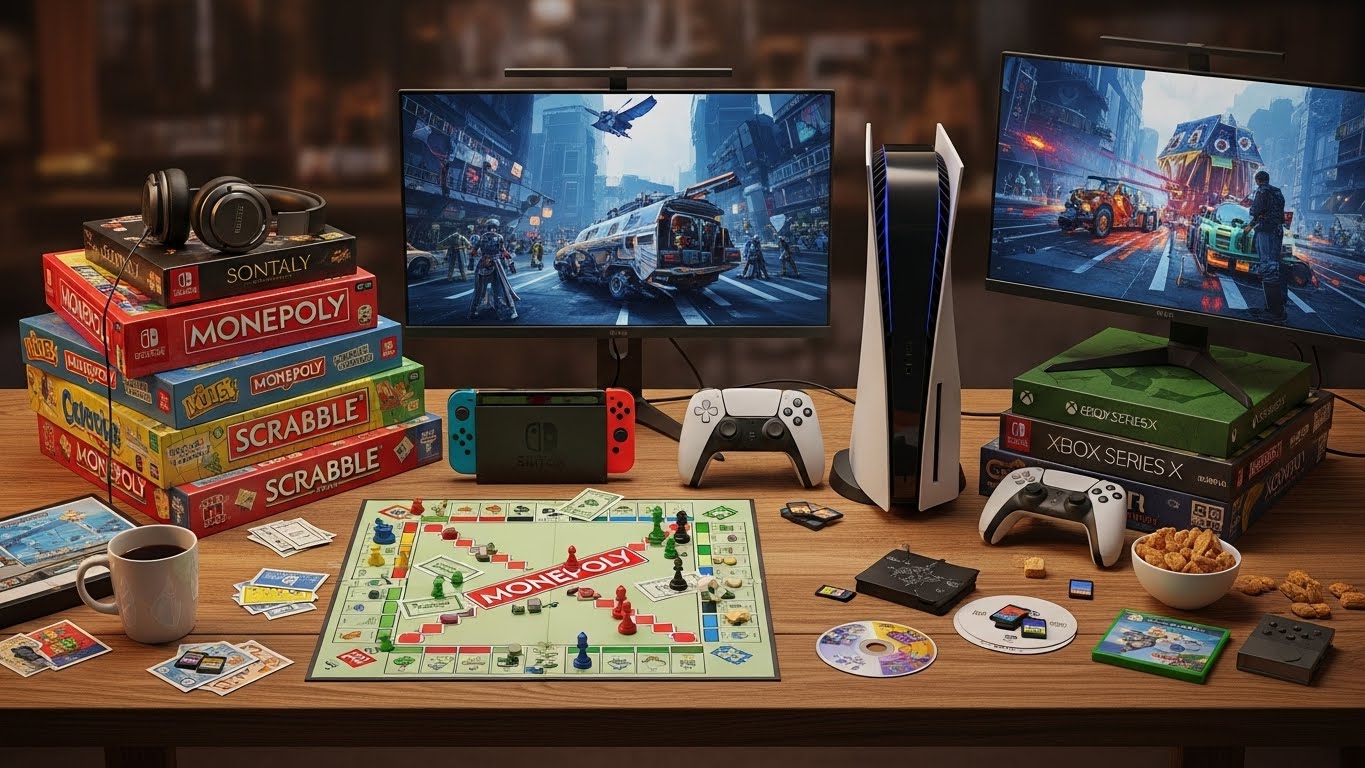
Gaming has come a long way since its humble beginnings in the 1950s. What was once a niche hobby, enjoyed by a small group of tech enthusiasts and early adopters, has since blossomed into one of the world’s most popular forms of entertainment. Today, gaming is a multi-billion dollar industry that appeals to millions of people from all walks of life. It has evolved from simple pixelated graphics and basic gameplay mechanics to sprawling open-world adventures, hyper-realistic visuals, and virtual reality experiences.
In this blog post, we’ll take a deep dive into the history of video games, exploring how they have evolved over the decades, and what the future holds for this exciting medium.
The Birth of Video Games: 1950s to 1970s
The origins of gaming can be traced back to the early days of computing. In the 1950s and 1960s, university researchers and engineers began experimenting with interactive digital displays and rudimentary video games. The very first recognized video game was “Tennis for Two,” created by physicist William Higinbotham in 1958. This simple game allowed two players to use knobs to control paddles and hit a ball back and forth on a screen. It was displayed on an oscilloscope, which is a type of electronic instrument used for viewing waveforms.
In 1962, another early video game, “Spacewar!” was developed by computer scientist Steve Russell at MIT. This game was one of the first to gain widespread attention and popularity among computer enthusiasts. It featured two players controlling spacecraft and attempting to destroy each other while avoiding gravitational forces.
The commercial viability of video games began to take shape in the early 1970s. Nolan Bushnell and Ted Dabney, two engineers, founded Atari and released the first commercially successful arcade game, “Pong,” in 1972. “Pong” was a simple but highly addictive game that simulated table tennis. Its success marked the beginning of the video game industry as we know it today.
The Golden Age of Arcade Games: 1980s
The 1980s marked a period of explosive growth for the video game industry. Arcade machines became a staple of entertainment in malls, arcades, and other public spaces. During this time, several iconic games were released, which would go on to become cultural phenomena.
One of the most significant events of the 1980s was the launch of “Space Invaders” in 1978. Created by Tomohiro Nishikado, this game popularized the concept of scrolling shooters and set the stage for many of the games that followed. It was also one of the first games to feature a high score system, which incentivized players to keep playing to beat their friends’ scores.
In 1980, Namco released “Pac-Man,” a game that quickly became a global sensation. Unlike many of its predecessors, “Pac-Man” didn’t involve shooting or combat. Instead, players guided a yellow, pie-shaped character through a maze, eating pellets while avoiding ghosts. The game’s unique gameplay, catchy music, and simple but engaging mechanics helped it become one of the most beloved games of all time.
The 1980s also saw the rise of home consoles, with the Atari 2600 being one of the most prominent. Released in 1977, the Atari 2600 helped bring arcade-style gaming to living rooms around the world. This period also introduced titles like “Donkey Kong,” which introduced the world to Mario (then called Jumpman), and “Galaga,” which became a hit for its vibrant graphics and addicting gameplay.
The 1990s: The Rise of 3D and Console Wars
The 1990s ushered in a new era for gaming, as advancements in technology began to bring more immersive experiences to players. The graphics went from 2D to 3D, and gaming consoles became more powerful, giving developers the tools they needed to create more complex and visually stunning games.
One of the most iconic moments of the 1990s was the launch of the Sony PlayStation in 1994. The PlayStation was a game-changer in terms of both hardware and game design. It brought a host of beloved franchises, including “Final Fantasy VII,” “Gran Turismo,” and “Metal Gear Solid,” into the spotlight. The PlayStation’s success also paved the way for the competition that would define the decade—the console wars.
During this time, Nintendo was also evolving its gaming console offerings. The Super Nintendo Entertainment System (SNES) had a tremendous influence on the industry, with games like “Super Mario World,” “The Legend of Zelda: A Link to the Past,” and “Super Metroid” becoming benchmarks for platformers and action-adventure games.
Meanwhile, Sega was in the fight with its Sega Genesis and the revolutionary Sega Saturn and Dreamcast consoles. Though the Dreamcast ultimately didn’t survive long in the market, it brought forward games like “Shenmue,” “Jet Set Radio,” and “Sonic Adventure,” which were ahead of their time in terms of graphics and gameplay.
The 1990s also saw the rise of 3D gaming, with the “Super Mario 64” and “The Legend of Zelda: Ocarina of Time” becoming landmark titles for the Nintendo 64. These games demonstrated the potential of 3D environments and set the stage for the open-world games we see today.
The 2000s: Online Multiplayer and the Explosion of Mobile Gaming
As the 21st century dawned, gaming continued to evolve rapidly, especially with the advent of high-speed internet and broadband connections. One of the most significant developments of the 2000s was the rise of online multiplayer gaming, which allowed players to connect and compete with others across the globe.
In 2001, Microsoft launched the Xbox and introduced the Xbox Live service, which revolutionized online console gaming. Games like “Halo 2” and “Call of Duty 4: Modern Warfare” became staples of the online gaming community. Meanwhile, Sony’s PlayStation 2 (PS2) maintained its dominance with an impressive library of games, including “Grand Theft Auto: San Andreas” and “Final Fantasy X.”
In addition to console gaming, the early 2000s saw the rise of mobile gaming, as mobile phones became more advanced. The release of games like “Snake” on Nokia phones sparked a new form of gaming on the go. Over time, mobile gaming grew exponentially, especially with the rise of smartphones. The launch of Apple’s App Store in 2008 opened up a world of casual and free-to-play games, such as “Angry Birds,” “Candy Crush,” and “Clash of Clans,” which introduced millions of new players to gaming.
The 2010s: Open-World Games, VR, and Esports
The 2010s represented a defining decade in the world of gaming. The evolution of technology brought about massive changes in both the design and experience of video games. One of the standout trends during this time was the rise of open-world games. Titles like “The Elder Scrolls V: Skyrim,” “Grand Theft Auto V,” and “The Witcher 3: Wild Hunt” gave players vast, explorable worlds to immerse themselves in. These games were not just about completing objectives—they were about losing oneself in a fully realized universe.
The 2010s also saw the growth of esports as a global phenomenon. Competitive gaming tournaments, such as “League of Legends” World Championship and “The International” for Dota 2, attracted millions of viewers and offered enormous prize pools. Esports became so popular that games like “Fortnite” and “PUBG” brought in new players and helped cement gaming as a legitimate form of professional entertainment.
In addition to these developments, virtual reality (VR) began to make its mark on the gaming industry. The release of the Oculus Rift and PlayStation VR opened up a whole new realm of immersive gaming experiences. Although VR is still in its early stages, games like “Beat Saber” and “Half-Life: Alyx” offered players a taste of what the future holds for immersive, interactive gameplay.
The 2020s and Beyond: The Future of Gaming
As we look ahead to the future of gaming, it’s clear that the possibilities are nearly endless. With advancements in artificial intelligence (AI), cloud gaming, and augmented reality (AR), the gaming landscape is poised for even more transformative changes.
Cloud gaming services like Google Stadia, Xbox Cloud Gaming, and NVIDIA GeForce NOW have made it possible for players to stream games on virtually any device, eliminating the need for powerful consoles or PCs. This shift could democratize gaming even further, as people with lower-end devices will have access to high-quality, cutting-edge games.
AI is also playing a larger role in the development of games, with non-playable characters (NPCs) becoming more sophisticated and responsive to player actions. This will lead to more dynamic and personalized gaming experiences.
In terms of hardware, the future of gaming looks even more promising with the continued development of next-gen consoles like the PlayStation 5 and Xbox Series X, which bring unprecedented levels of graphical fidelity and faster loading times.
Conclusion
From simple pixelated beginnings to immersive, interactive worlds, gaming has come a long way over the past few decades. Today, it’s a multi-faceted, global industry that touches the lives of millions around the world. Whether you’re a casual mobile gamer, an esports enthusiast, or a VR adventurer, there’s no doubt that the world of gaming will continue to evolve in exciting ways in the years to come.
As technology advances, so too will the experiences available to players. And one thing is for sure: the future of gaming is bright, with new worlds, new challenges, and new experiences waiting to be discovered.