Introduction: Understanding the Power of Games
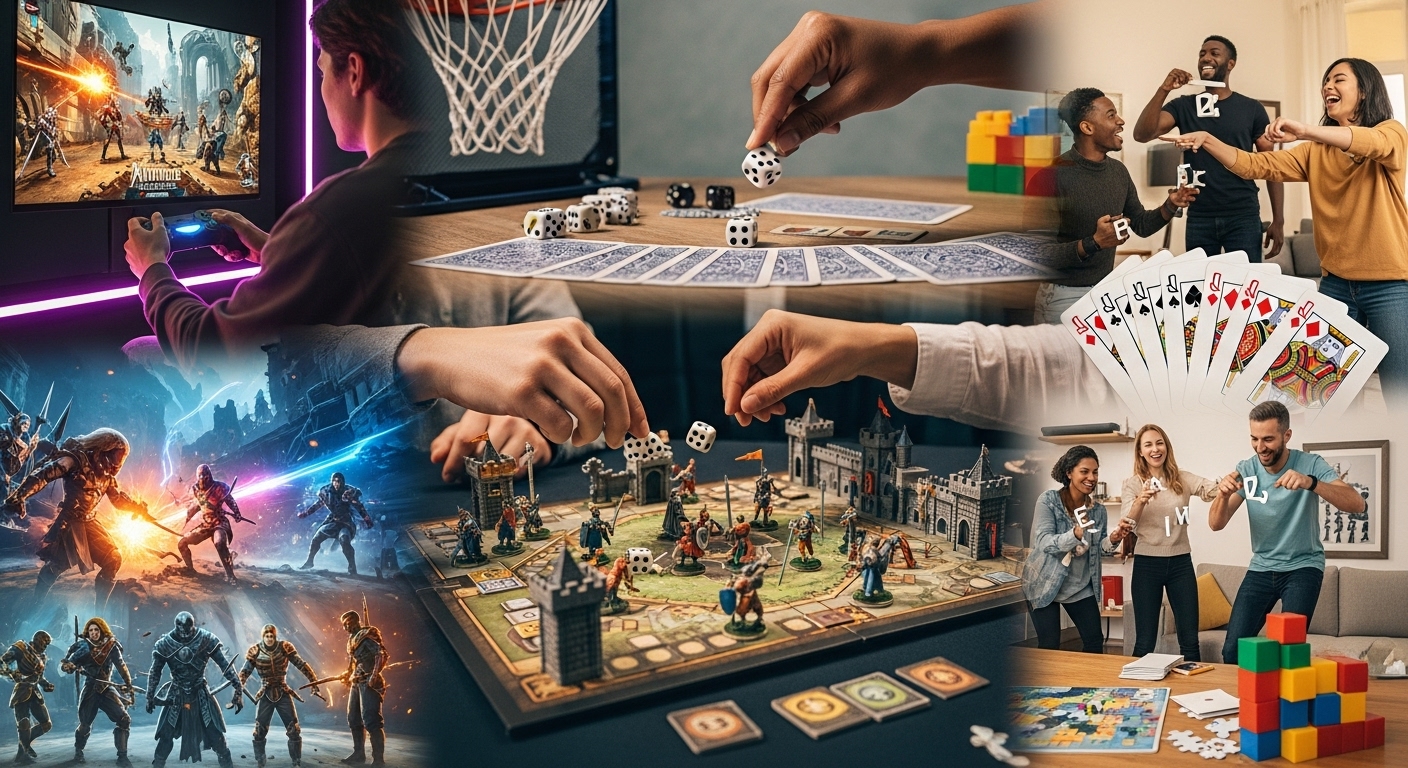
Gaming has evolved far beyond a simple pastime. From the earliest arcade machines to today’s immersive virtual reality experiences, video games have become an integral part of modern culture. What started as a niche hobby has transformed into a multi-billion-dollar industry influencing technology, storytelling, social interaction, and even education. Games now offer far more than entertainment; they serve as tools for creativity, learning, and community building.
In this article, we explore the history of gaming, the diverse types of games available today, the technology driving their evolution, and the trends that are shaping the future of this dynamic industry.
The Origins of Video Games: Humble Beginnings
The journey of video games began in the 1950s and 1960s with simple experiments in computing and graphics. Early games were limited by technology but showcased creativity and innovation. One of the first interactive games was Tennis for Two, created in 1958 by physicist William Higinbotham. The game simulated a simple tennis match on an oscilloscope screen, providing players with a new form of engagement.
In 1962, Spacewar! emerged as one of the earliest widely distributed computer games. Developed by Steve Russell and his colleagues at MIT, it allowed players to control spaceships in a duel while navigating obstacles. These early experiments set the stage for the commercial arcade and home gaming markets that would follow in the 1970s and 1980s.
The Arcade Era: Fun and Accessibility
The 1970s and early 1980s marked the Golden Age of arcade gaming. With the release of Pong in 1972 by Atari, video games became accessible to the general public. This simple table-tennis style game captivated players and introduced the concept of competitive scoring. Following Pong, arcade hits like Space Invaders, Pac-Man, and Donkey Kong became cultural phenomena.
Arcade gaming was not only about entertainment; it became a social activity. People would gather at arcades to play, compete, and share experiences. This era established the foundation for competitive gaming and highlighted the potential for video games to bring communities together.
The Rise of Home Consoles: Gaming Enters the Living Room
The late 1970s and 1980s also saw the introduction of home consoles, allowing gaming to move from public arcades to private living rooms. The Nintendo Entertainment System (NES) became an iconic platform, with titles like Super Mario Bros., The Legend of Zelda, and Metroid becoming staples of the era. Home consoles gave players the freedom to play at their convenience, fostering a personal connection to the games and characters they loved.
The 16-bit era that followed brought improvements in graphics, sound, and gameplay complexity. Consoles like the Sega Genesis and Super Nintendo Entertainment System introduced more detailed worlds and sophisticated mechanics, expanding the possibilities for storytelling and player interaction.
The Advent of 3D Gaming: Expanding Horizons
The late 1990s and early 2000s marked a major leap in gaming technology with the rise of 3D graphics. Consoles such as the PlayStation, PlayStation 2, and Nintendo GameCube enabled fully 3D environments, giving players the freedom to explore vast virtual worlds. Games like Final Fantasy VII, The Legend of Zelda: Ocarina of Time, and Grand Theft Auto III redefined gameplay by offering immersive worlds, complex narratives, and unprecedented player freedom.
This era also saw the rise of online multiplayer gaming. Gamers could connect with friends and strangers over the internet, participating in co-op missions or competitive battles. This social aspect of gaming added a new dimension, fostering communities and online friendships that extended beyond the game itself.
Mobile Gaming: Gaming on the Go
The advent of smartphones in the late 2000s created an entirely new gaming platform. Mobile games made gaming accessible to virtually anyone with a phone, expanding the audience beyond traditional gamers. Titles like Angry Birds, Candy Crush, and Pokémon Go became global sensations, attracting millions of players worldwide.
Mobile gaming also introduced new business models, including free-to-play games with in-app purchases. These models allowed developers to reach large audiences while generating revenue through optional cosmetic or functional upgrades. Mobile gaming’s accessibility and convenience have made it one of the fastest-growing sectors of the gaming industry.
The Role of Storytelling in Modern Games
Modern games have evolved into powerful storytelling mediums. Beyond simple mechanics and objectives, many games now focus on narrative depth, character development, and emotional engagement. Games like The Last of Us, Red Dead Redemption 2, and Horizon Zero Dawn demonstrate that video games can deliver stories as compelling and impactful as movies or novels.
Branching storylines and player choice are common features in contemporary games, giving players the ability to influence outcomes and experience multiple perspectives. This level of interactivity allows for deeply personal experiences, where players feel genuinely involved in the story rather than passive observers.
Virtual Reality and Augmented Reality: Immersive Experiences
Virtual Reality (VR) and Augmented Reality (AR) represent the next frontier in gaming. VR allows players to step directly into fully immersive 3D worlds, interacting with their environment in ways that traditional games cannot replicate. VR headsets such as Oculus Rift, HTC Vive, and PlayStation VR have opened up new opportunities for exploration, combat, and puzzle-solving in virtual spaces.
AR blends digital elements with the real world, creating experiences that interact with a player’s physical surroundings. Games like Pokémon Go have shown how AR can make gaming a part of daily life, encouraging exploration, physical activity, and social interaction. Both VR and AR promise to redefine how players experience and interact with games.
Esports: Competitive Gaming as a Global Phenomenon
Esports has transformed competitive gaming into a professional and widely recognized sport. Competitive tournaments for games like League of Legends, Dota 2, Counter-Strike: Global Offensive, and Fortnite attract millions of viewers and offer multi-million-dollar prize pools. Professional players and teams have become celebrities, and esports events are now held in stadiums and broadcast to audiences worldwide.
The rise of esports highlights gaming’s potential as both entertainment and profession. It also underscores the importance of community, strategy, teamwork, and dedication in modern gaming.
Educational and Social Benefits of Gaming
Contrary to past perceptions, gaming can provide significant educational and social benefits. Strategy games and puzzles develop critical thinking, problem-solving, and planning skills. Multiplayer and cooperative games foster communication, teamwork, and leadership abilities. Story-driven games can improve empathy and emotional intelligence by encouraging players to understand characters’ motivations and perspectives.
Additionally, games can be used as tools for learning in classrooms and professional training. Gamification of education and skill development leverages the engaging nature of games to enhance motivation and retention of knowledge.
Trends Shaping the Future of Gaming
The gaming industry is constantly evolving, driven by technological innovation and changing player preferences. Several trends are shaping its future:
- Cloud Gaming: Players can stream games directly to their devices without high-end hardware, making gaming more accessible.
- Artificial Intelligence: AI enables smarter NPCs, adaptive gameplay, and personalized experiences for each player.
- Cross-Platform Gaming: Players can compete and collaborate across different devices, breaking down barriers between consoles, PCs, and mobile devices.
- Sustainable Gaming: Developers are increasingly considering environmental impact, optimizing games and hardware for energy efficiency.
Conclusion: Gaming as a Cultural Force
Games have come a long way from simple pixels and arcade machines to expansive, interactive worlds that entertain, challenge, and inspire. Gaming has grown into a cultural force that shapes technology, storytelling, and social interaction. Whether through immersive virtual worlds, competitive esports, or educational applications, games continue to redefine entertainment and human experience.
The future of gaming promises even more innovation, with VR, AR, AI, and cloud technology pushing the boundaries of what is possible. As games continue to evolve, they will remain a vital part of culture, offering players new ways to connect, create, and experience the world.
Gaming is no longer just a pastime; it is a dynamic, transformative medium that will continue to shape the way we play, learn, and interact for generations to come.